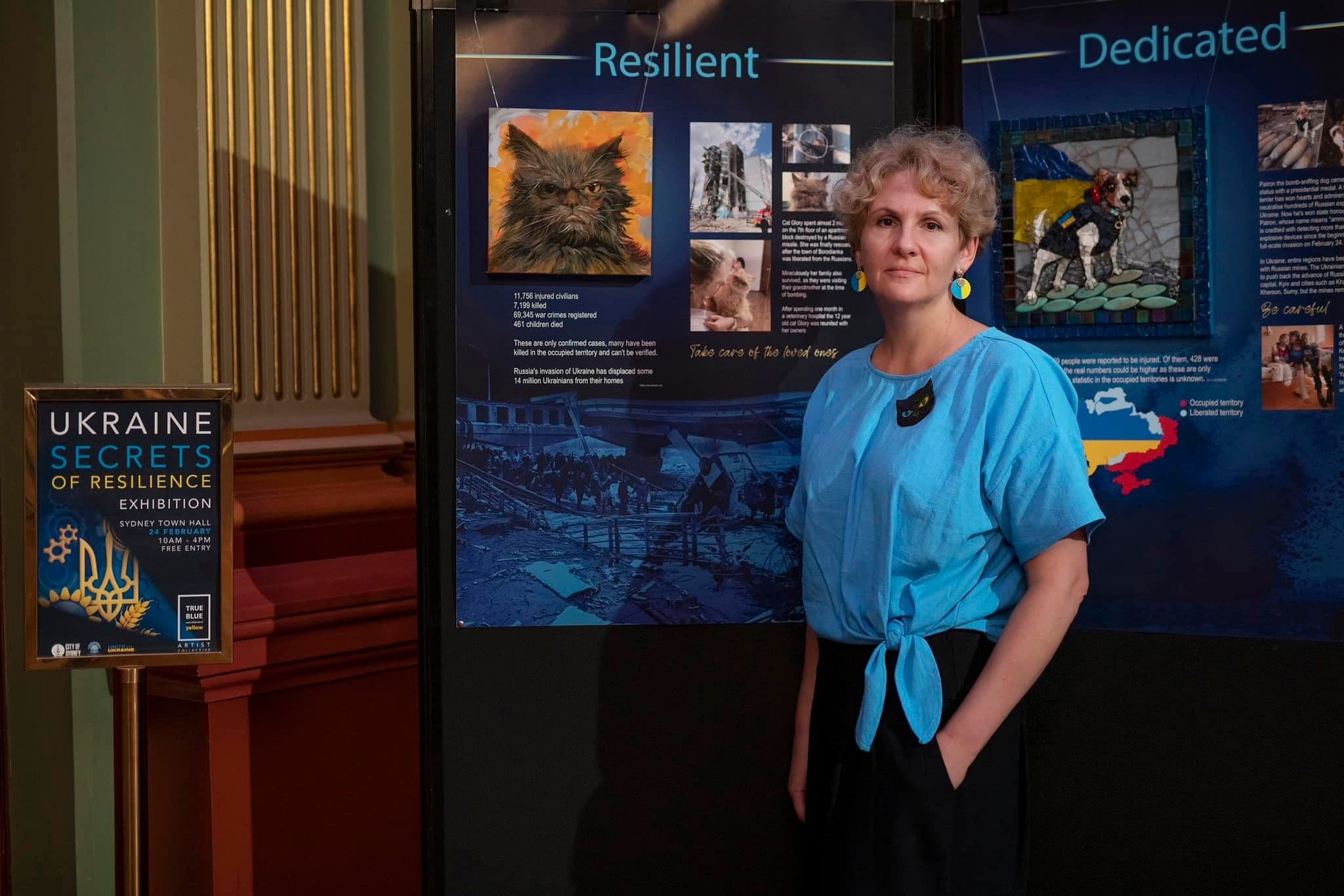
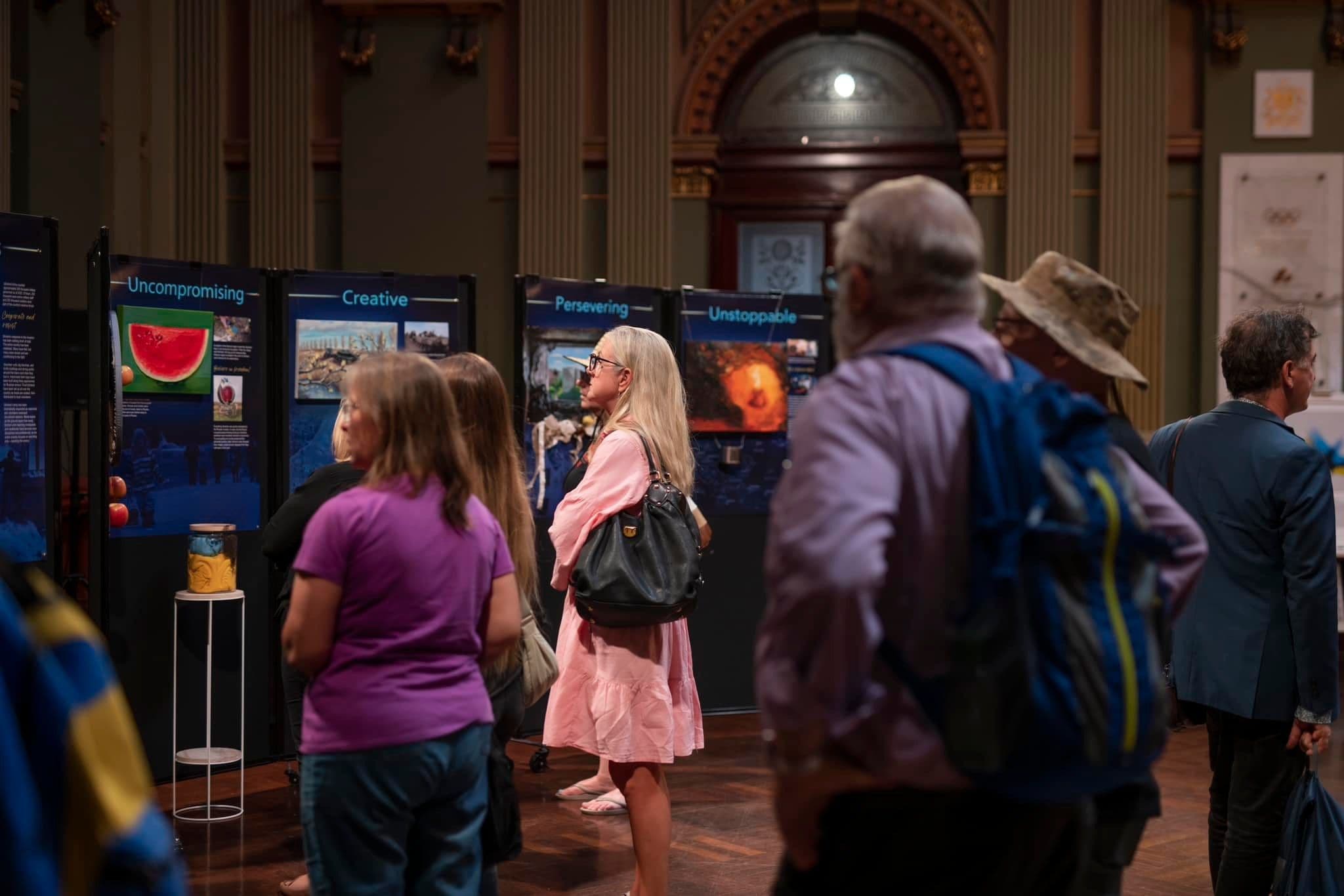
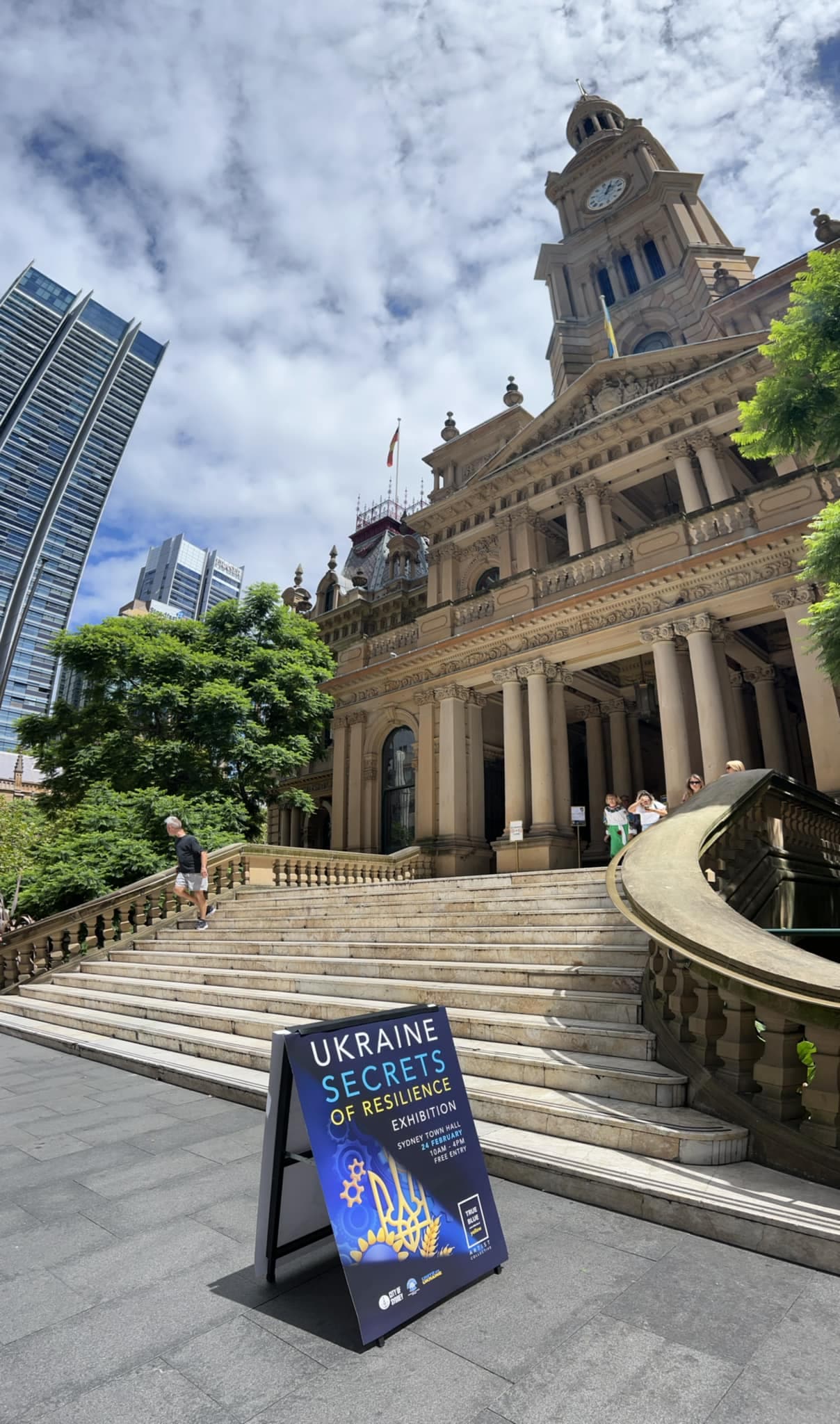
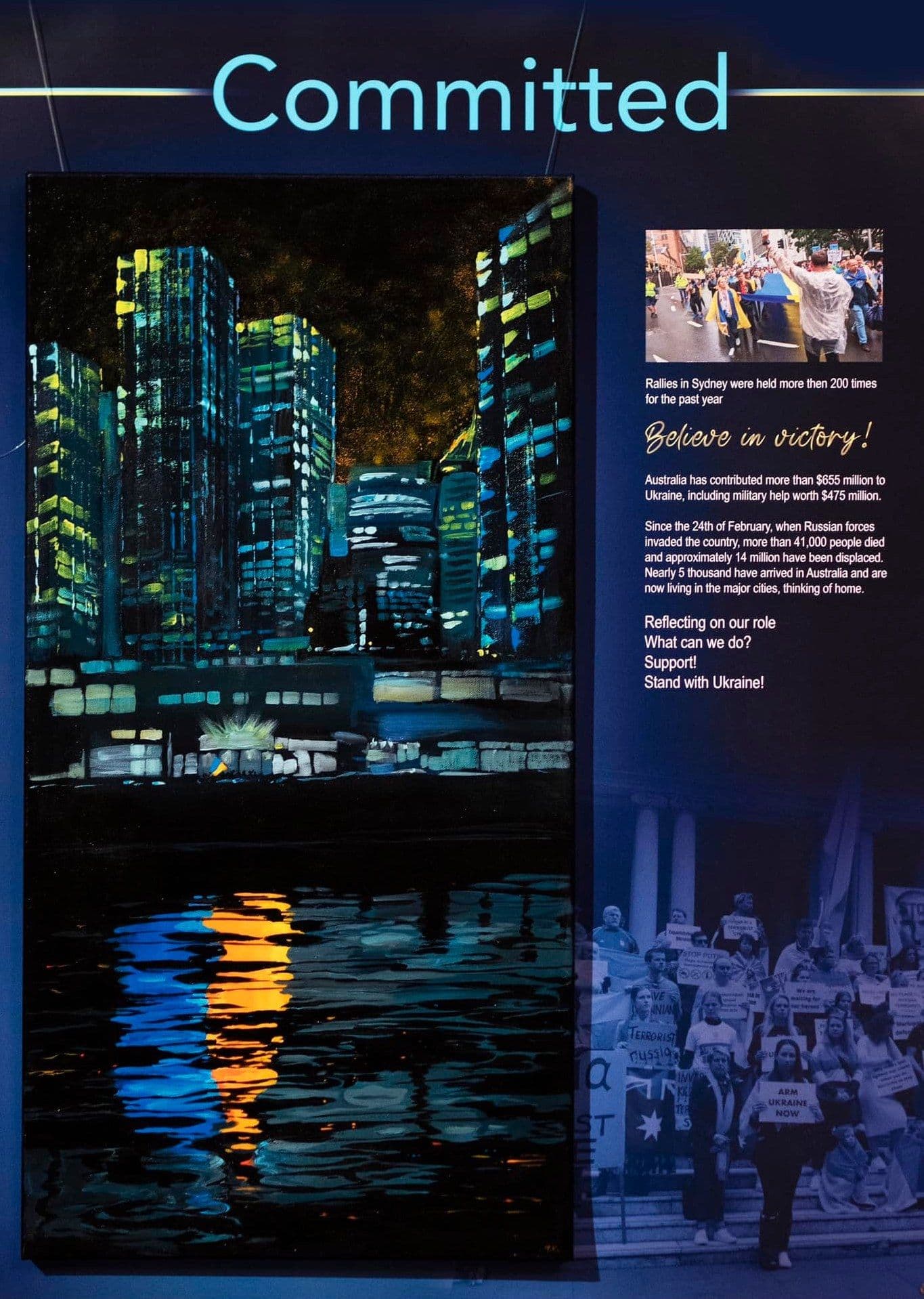
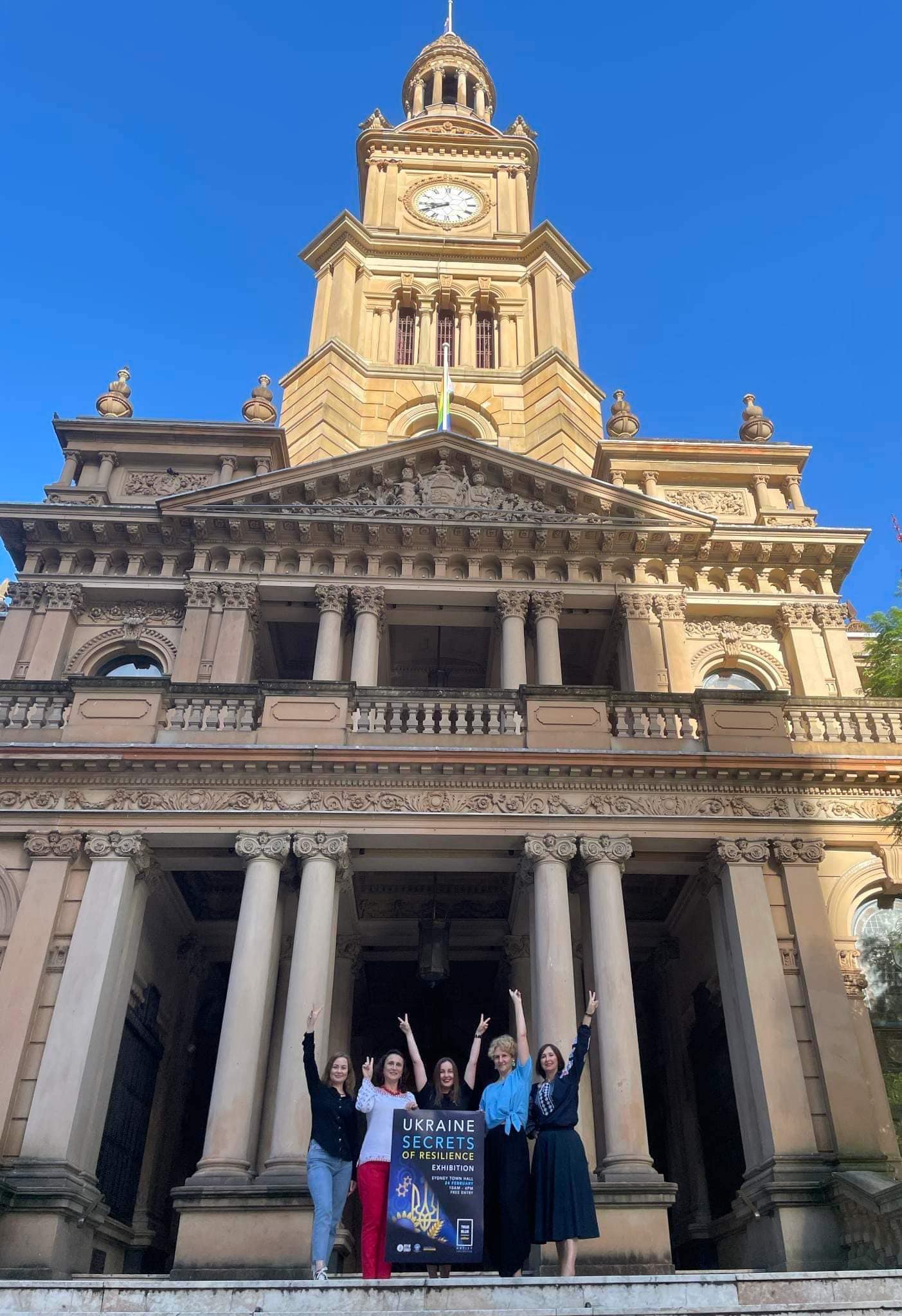
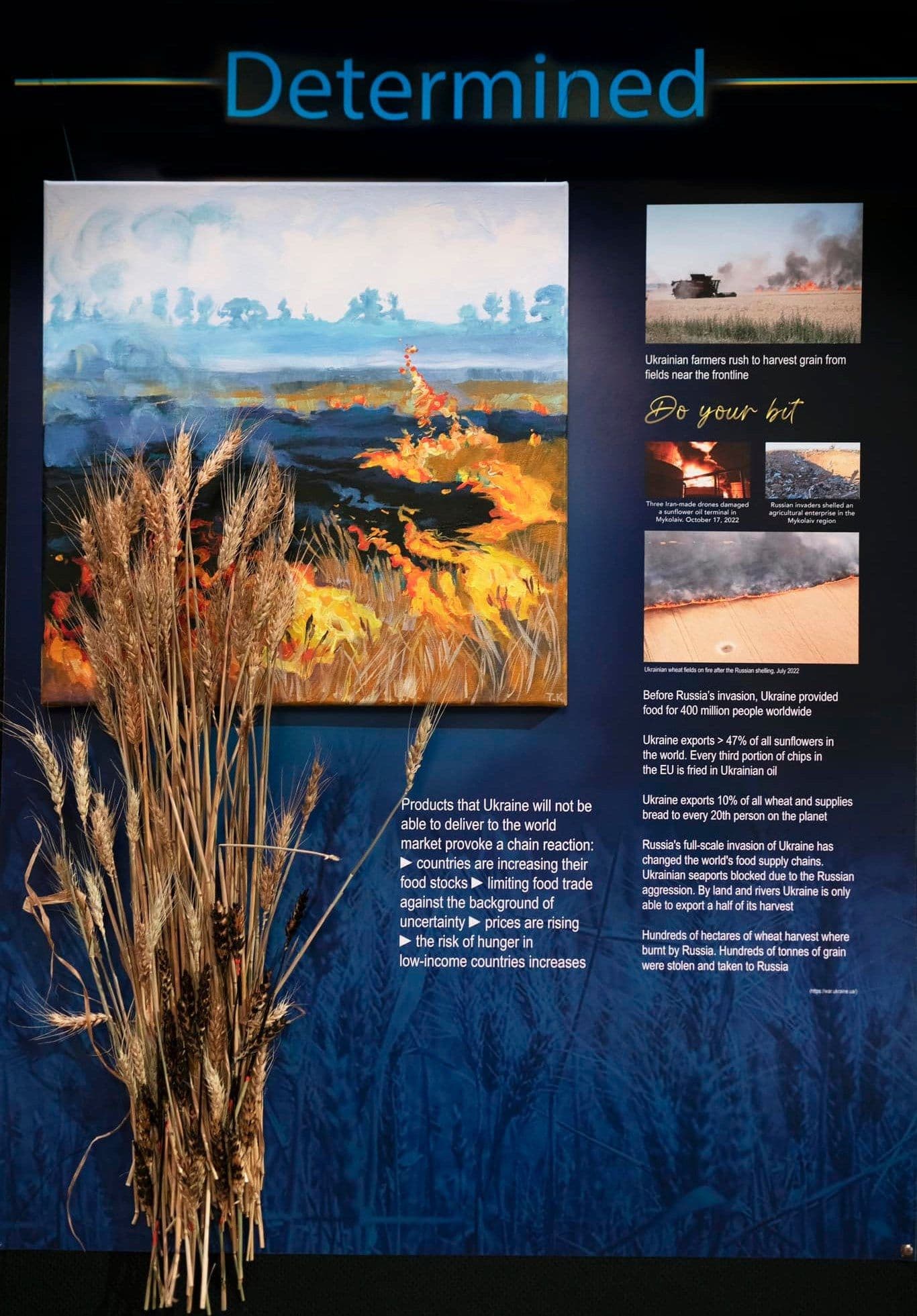
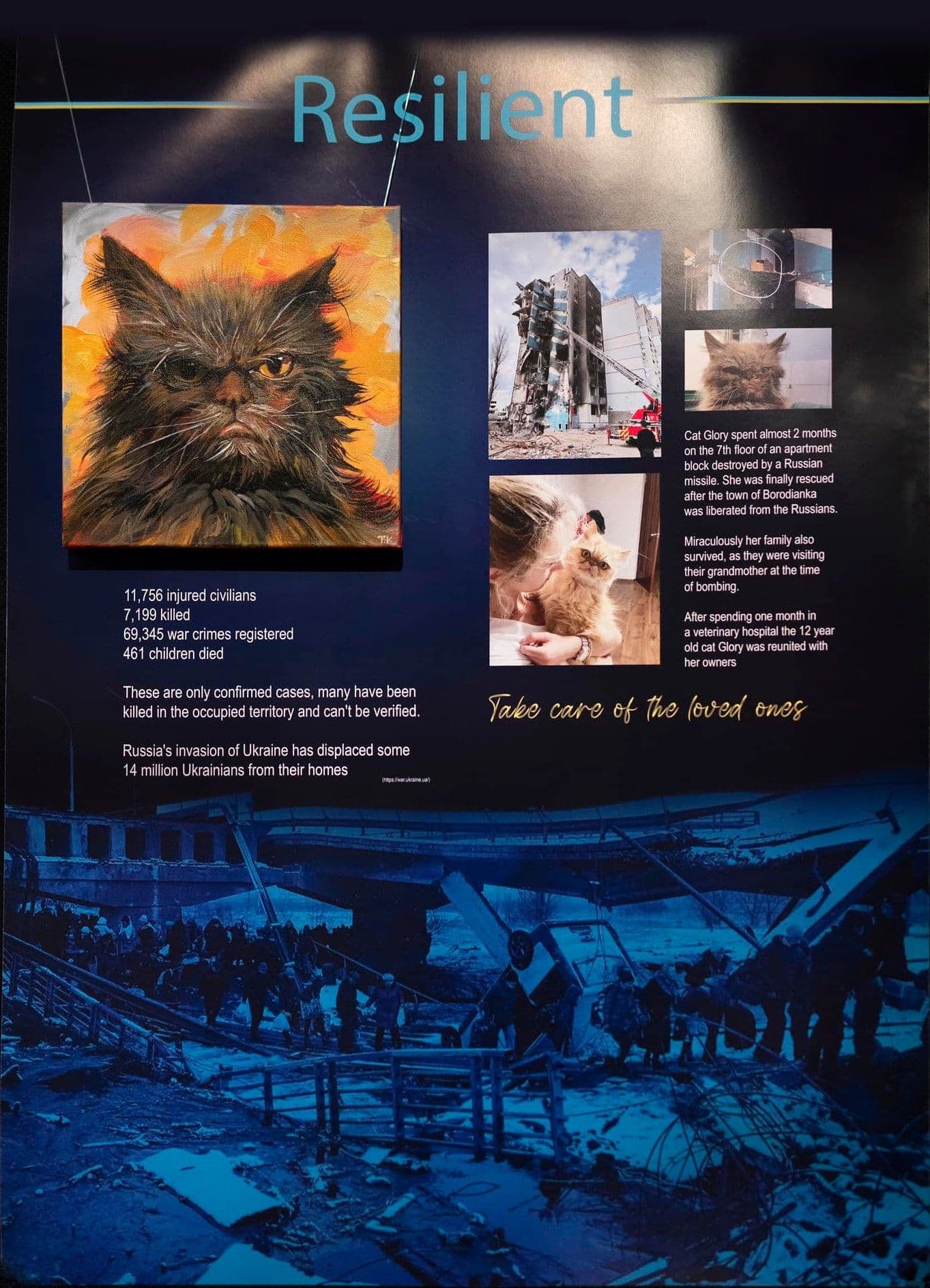
Ukraine: Secrets of Resilience was an exhibition by True Blue & a Little Bit of Yellow, presented at Sydney Town Hall to mark one year since the start of the full-scale Russian invasion of Ukraine.
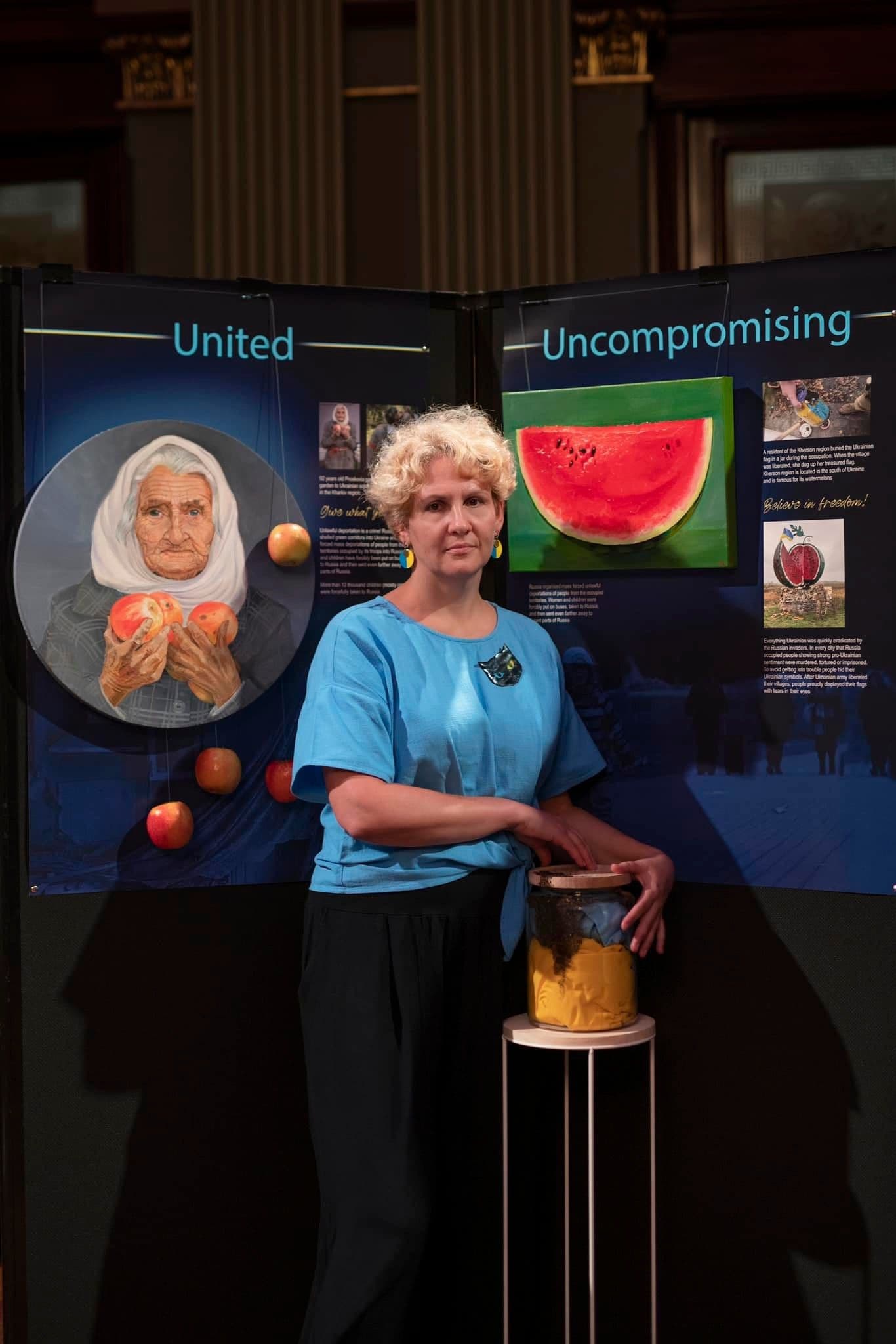
I wanted to find a way to help people in Australia understand what war is — not in abstract terms, but through human experience. That idea became Secrets of Resilience. I went through a year of devastating news and personal testimonies, selecting stories that resonated most deeply and spoke about survival, loss, strength, and endurance.
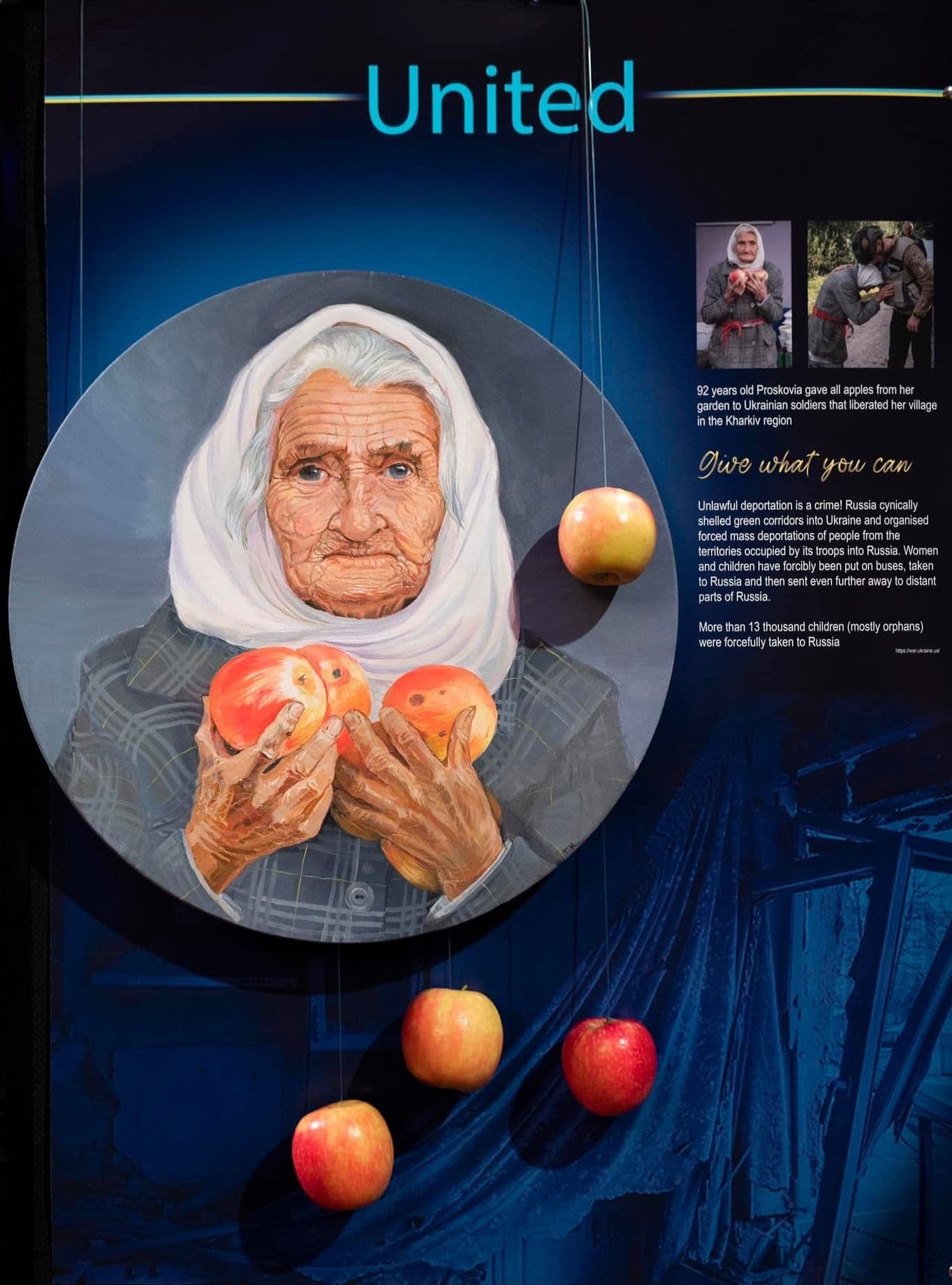
From these stories, I created a series of posters combining documentary photographs, written accounts, and artworks — my own and those of fellow artists — alongside real objects carrying personal and symbolic meaning. Each element was chosen carefully, so the exhibition could be read, felt, and experienced rather than simply viewed.
Working through so much human pain was emotionally demanding. Revisiting these stories left a lasting mark, but I believe the process was necessary. The exhibition allowed many visitors to imagine themselves in a place of conflict and offered a glimpse into how people continue to live, endure, and remain human under unimaginable circumstances.
It was not an easy exhibition — but it was an important one.
10 July 2026
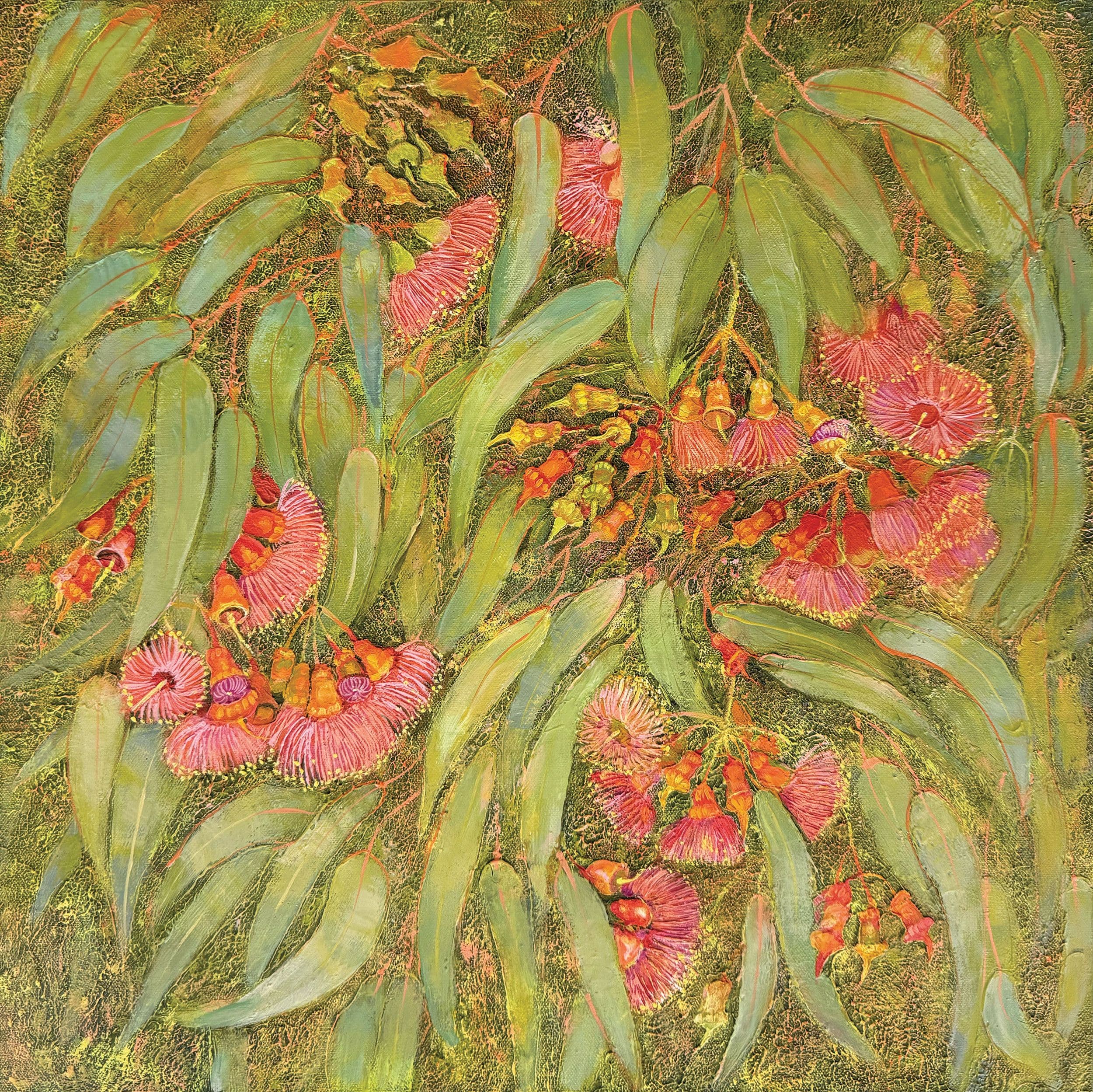
I am delighted to share that two of my artworks have been selected for The Language of Flowers, a curated group exhibition at & Something Else, a new contemporary gallery in the heart of Manly on Sydney's Northern Beaches. I am grateful for the opportunity to exhibit alongside a talented group of Australian artists. The Language of Flowers celebrates the beauty and symbolism of flowers, inviting to explore the relationship between humanity and the natural world through botanical forms. The exhibition brings together diverse artistic approaches inspired by growth, renewal, transformation, and the fleeting beauty of flowering life. As an artist, nature has always been at the heart of my practice. I am excited to contribute to this conversation through my selected works. See more here: https://www.andsomethingelse.com.au/language-of-flowers The Language of Flowers Exhibition Dates: 10 July – 2 August 2026