
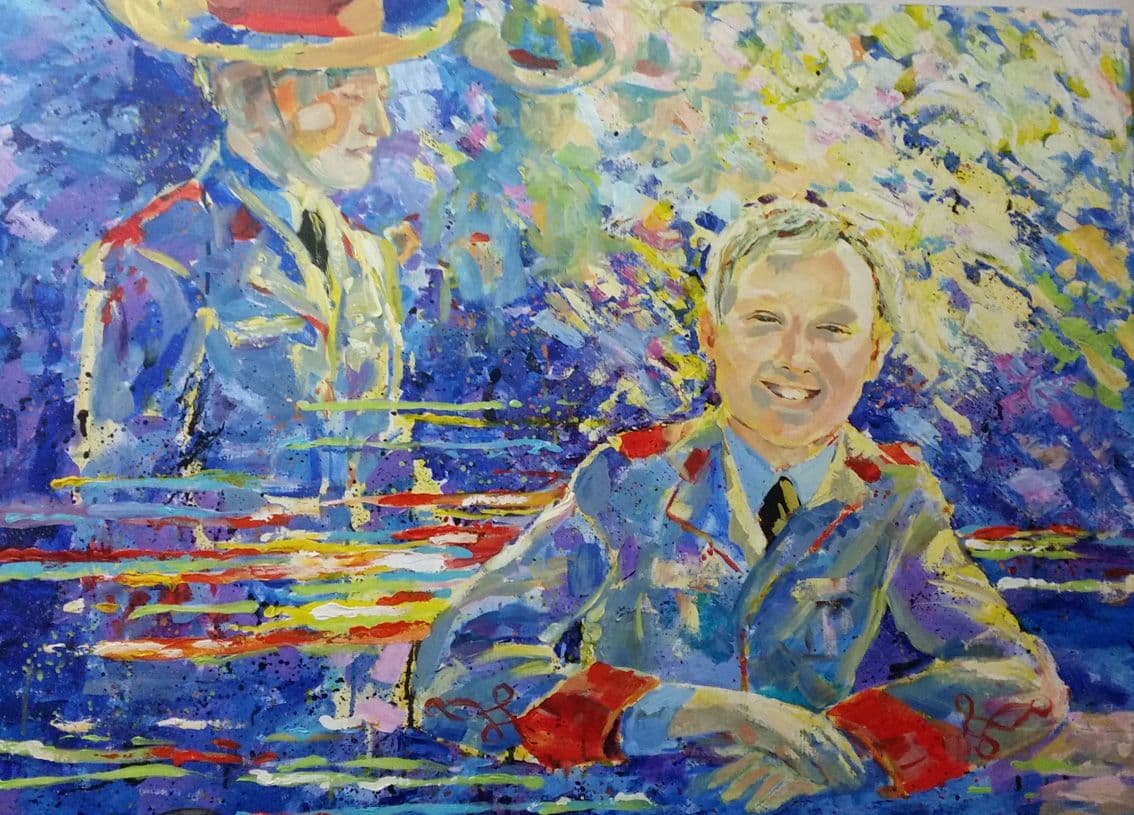
The fast-drying nature of acrylic paints brings an entirely different kind of energy to my practice. They provide immediate results and encourage a spontaneous, expressive approach that keeps the process fresh and dynamic.


What I love most about acrylics is their incredible versatility. They can be used on canvas, paper, or wood — opening endless creative possibilities for experimentation. Over the years, I’ve come to appreciate many of their qualities:
The combination of acrylics and texture paste allows for a dynamic interplay between colour, texture, and form — giving the artwork a unique, tactile quality. It’s a medium that rewards curiosity, experimentation, and the courage to explore new directions.


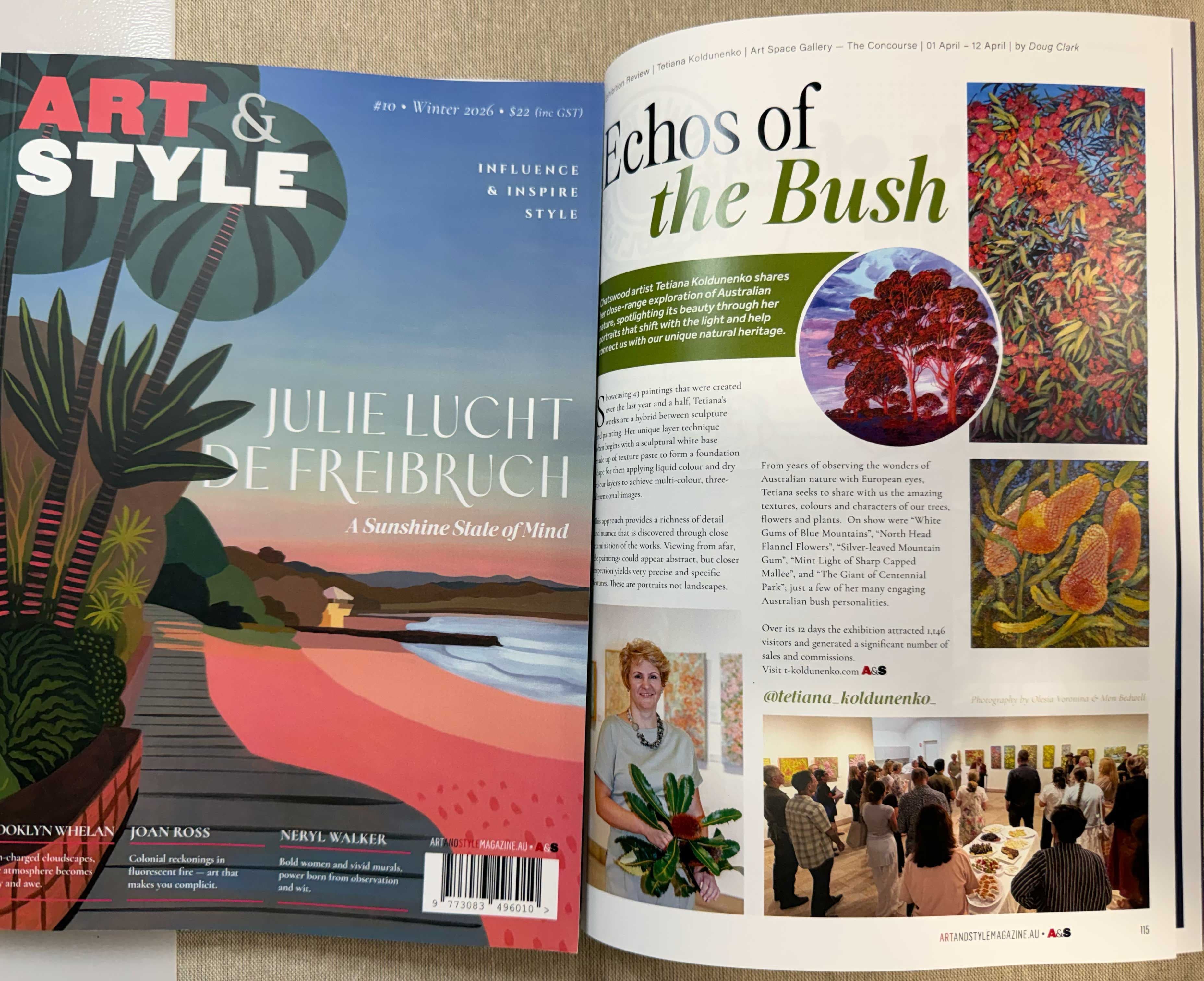
Art & Style magazine has featured a page about my exhibition, Echoes of the Bush. I can’t express how grateful I am to everyone who has supported my journey. Thank you, Wayne. Thank you, Northern Beaches Gallery. Thank you to the Art & Style magazine team. Thank you, Danielle and Doug. The magazine is filled with incredible artists and inspiring stories, so it’s a true honour to be included among them. Thank you all for believing in my art.

Every so often, a commission opens the door to an entirely new way of thinking. One such moment came when a client asked for something unexpected — a lightweight, sculptural object in the form of puppets. Creating puppets became an unusual and exciting way for me to explore my creativity. They sit somewhere between sculpture, design, and storytelling. Unlike painting, where the surface holds the narrative, puppets demand attention to volume, balance, texture, and movement. Even at rest, they suggest gesture, character, and presence. Working on these pieces allowed me to think beyond the wall and the frame, translating artistic ideas into tactile, three-dimensional forms. Each puppet became a small character — playful, expressive, and full of personality. This unexpected direction reminded me how important it is to stay open as an artist. New materials, new formats, and new requests can lead to discoveries that expand both practice and imagination — sometimes in the most surprising ways.

