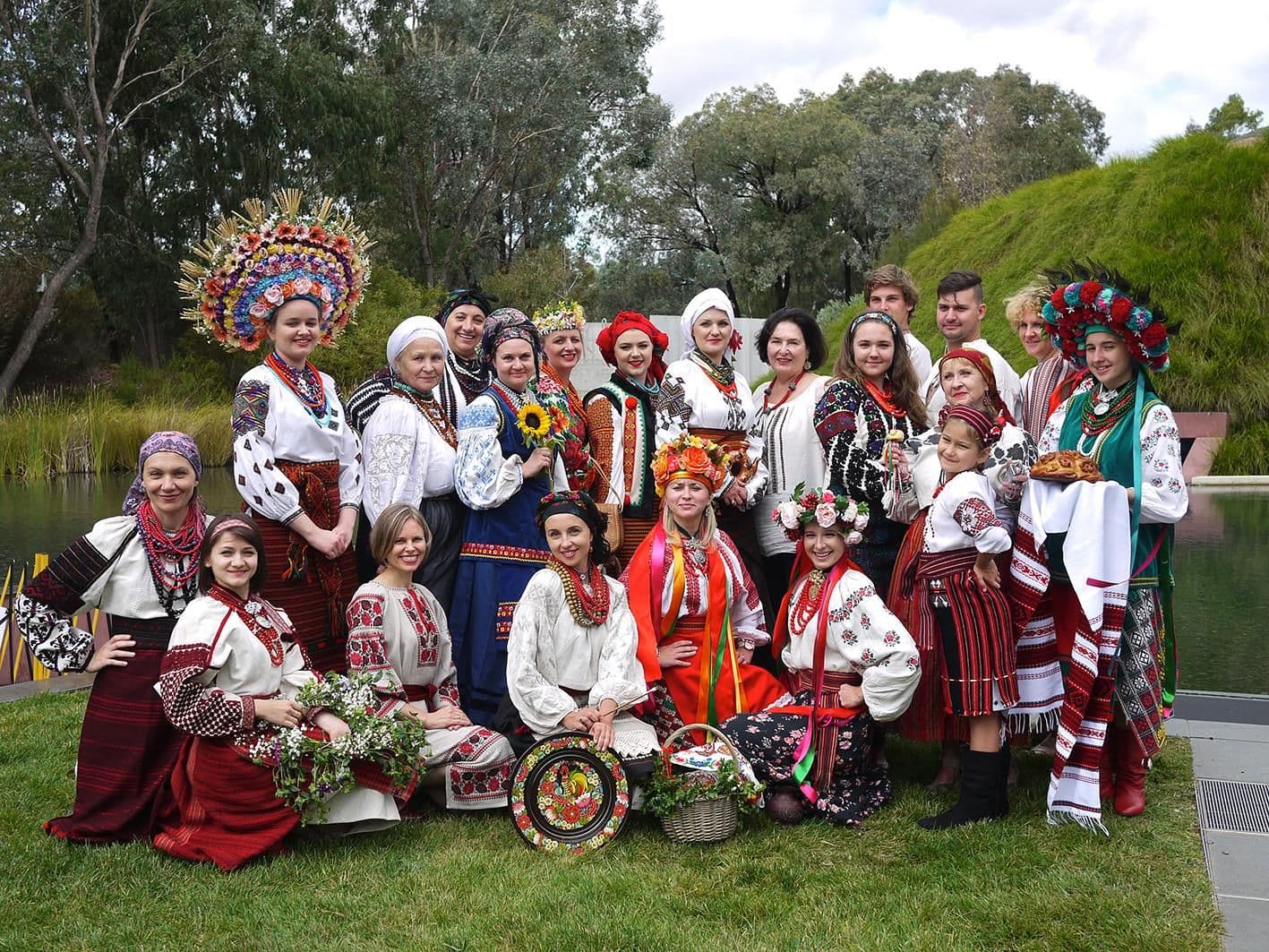
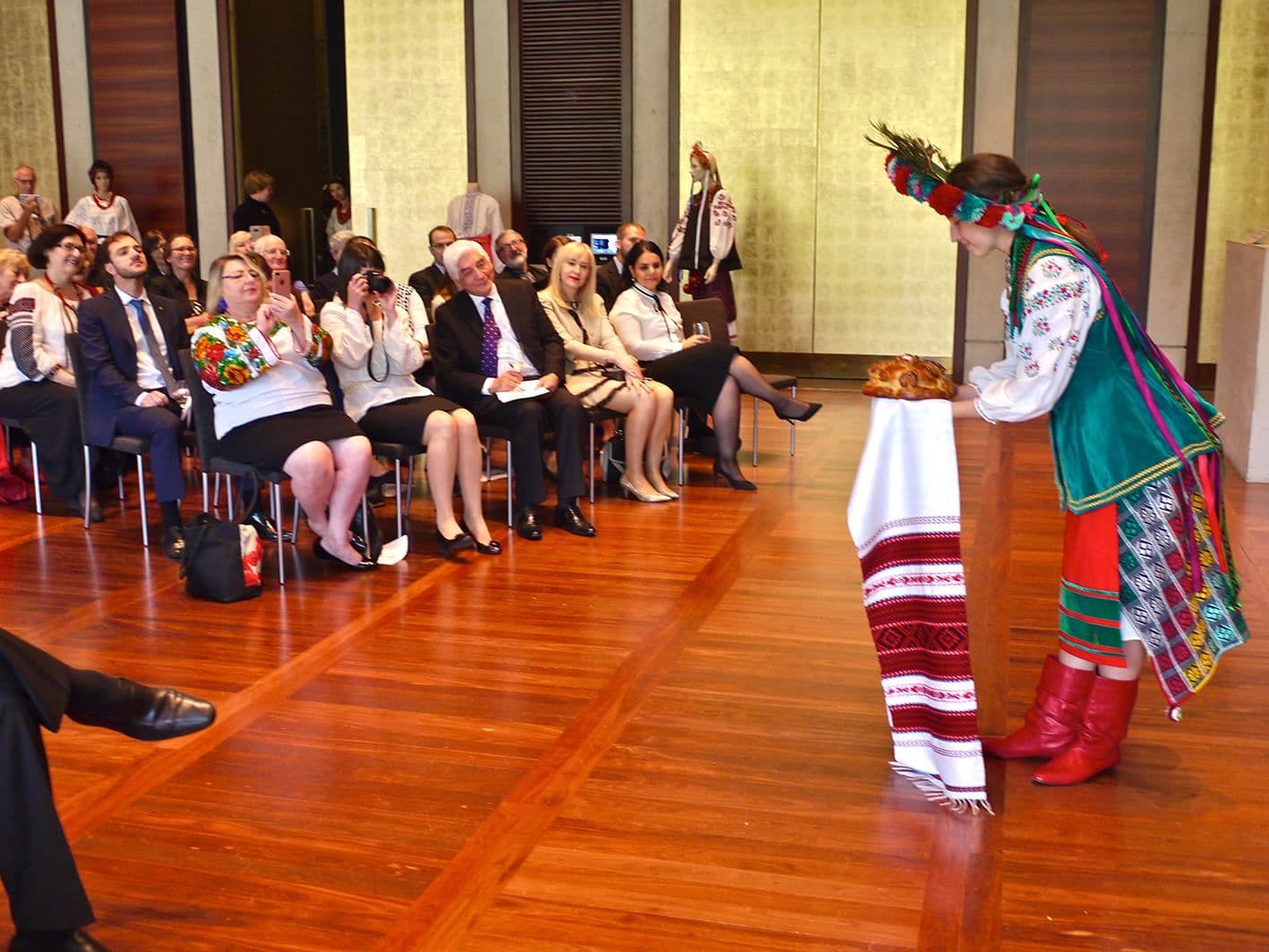
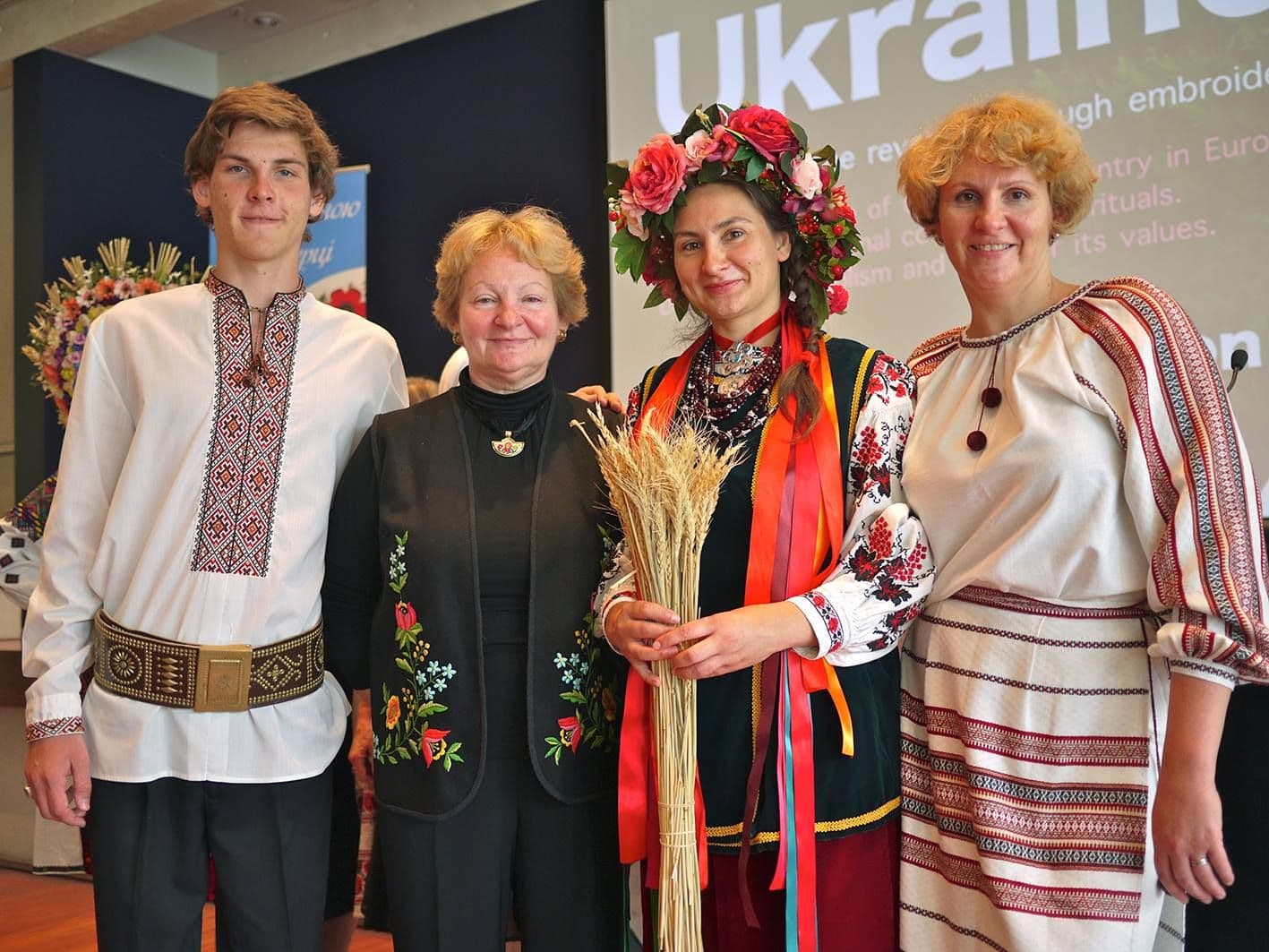
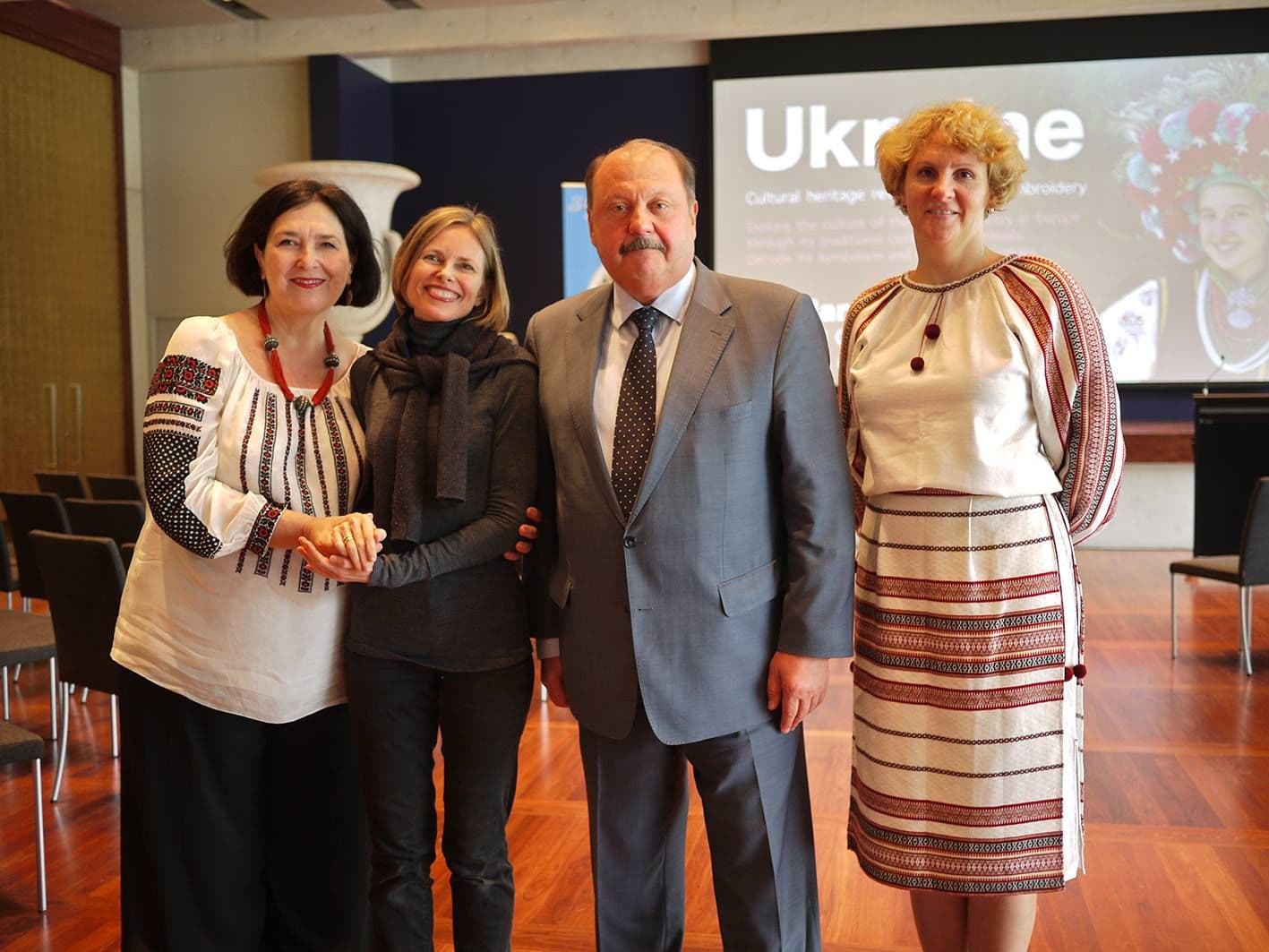
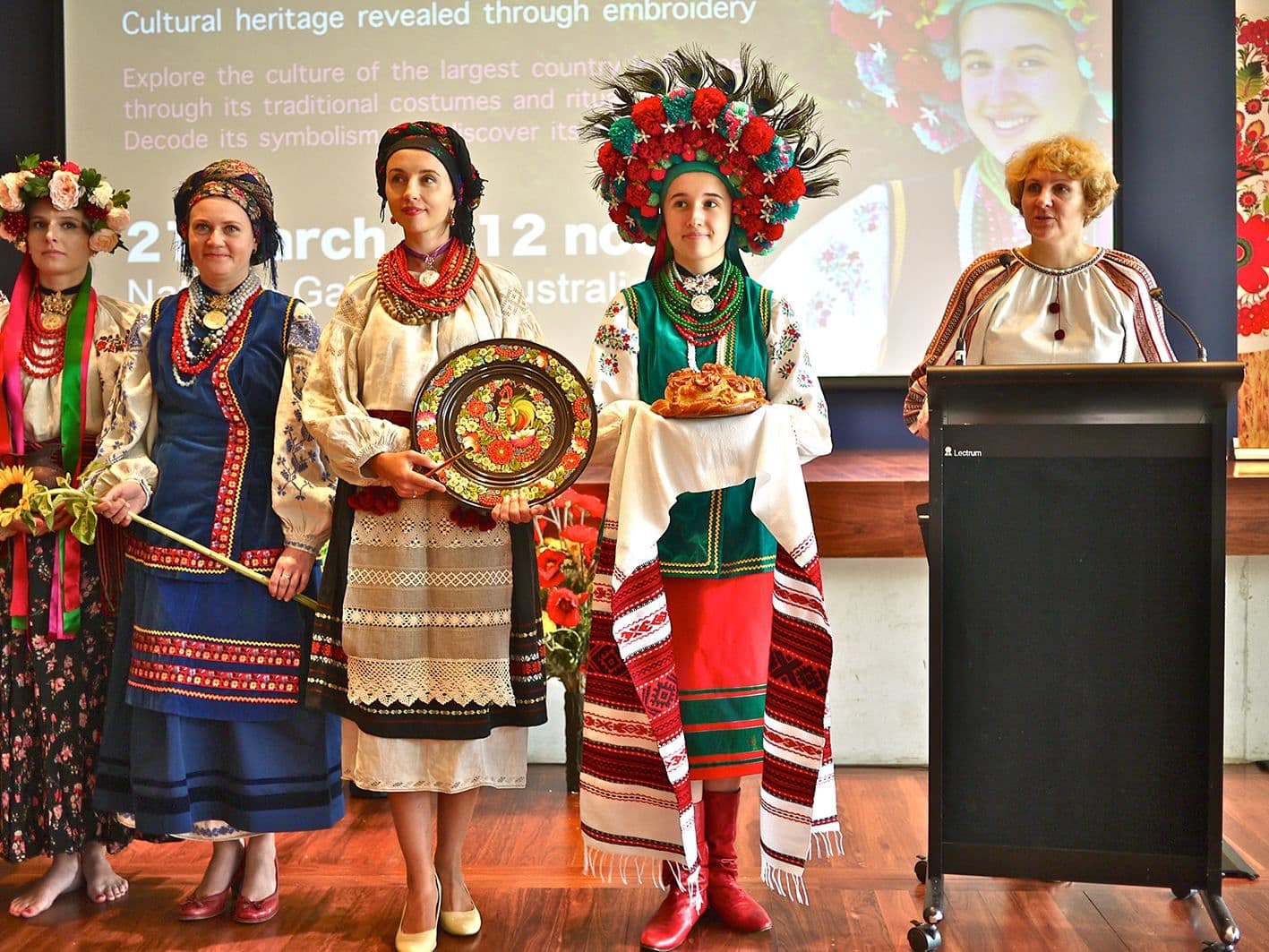
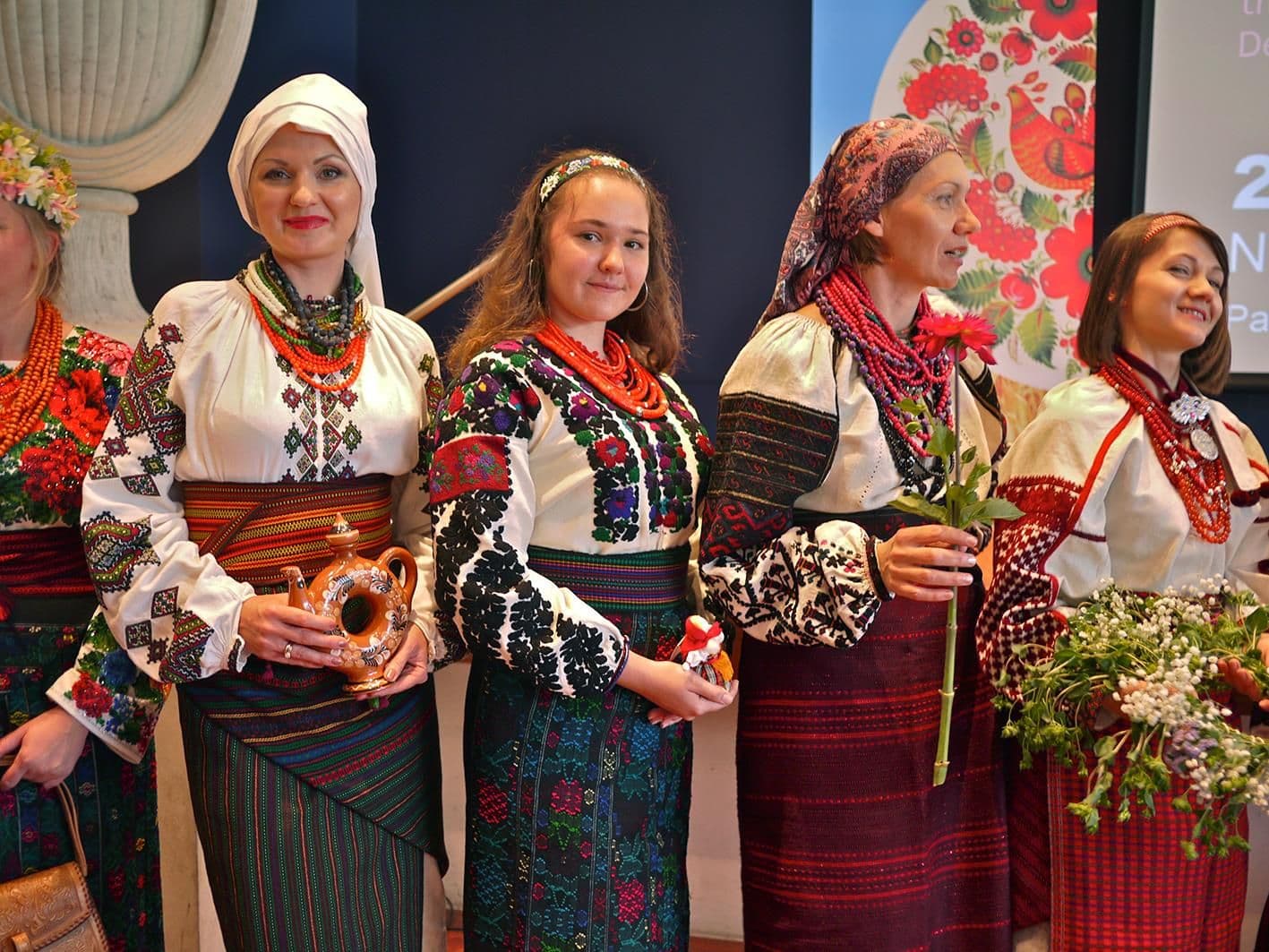
In 2018, I was invited to curate and coordinate a cultural performance for a diplomatic function at the National Gallery of Australia, at the request of the Embassy of Ukraine and on the initiative of Christine Syvenkyj-Bailey. The performance was created primarily from Christine Syvenkyj-Bailey’s private collection, with additional contributions from the collections of Sonia Mycak and Roxolana Mishalow. I am deeply grateful to them for their generosity and trust.
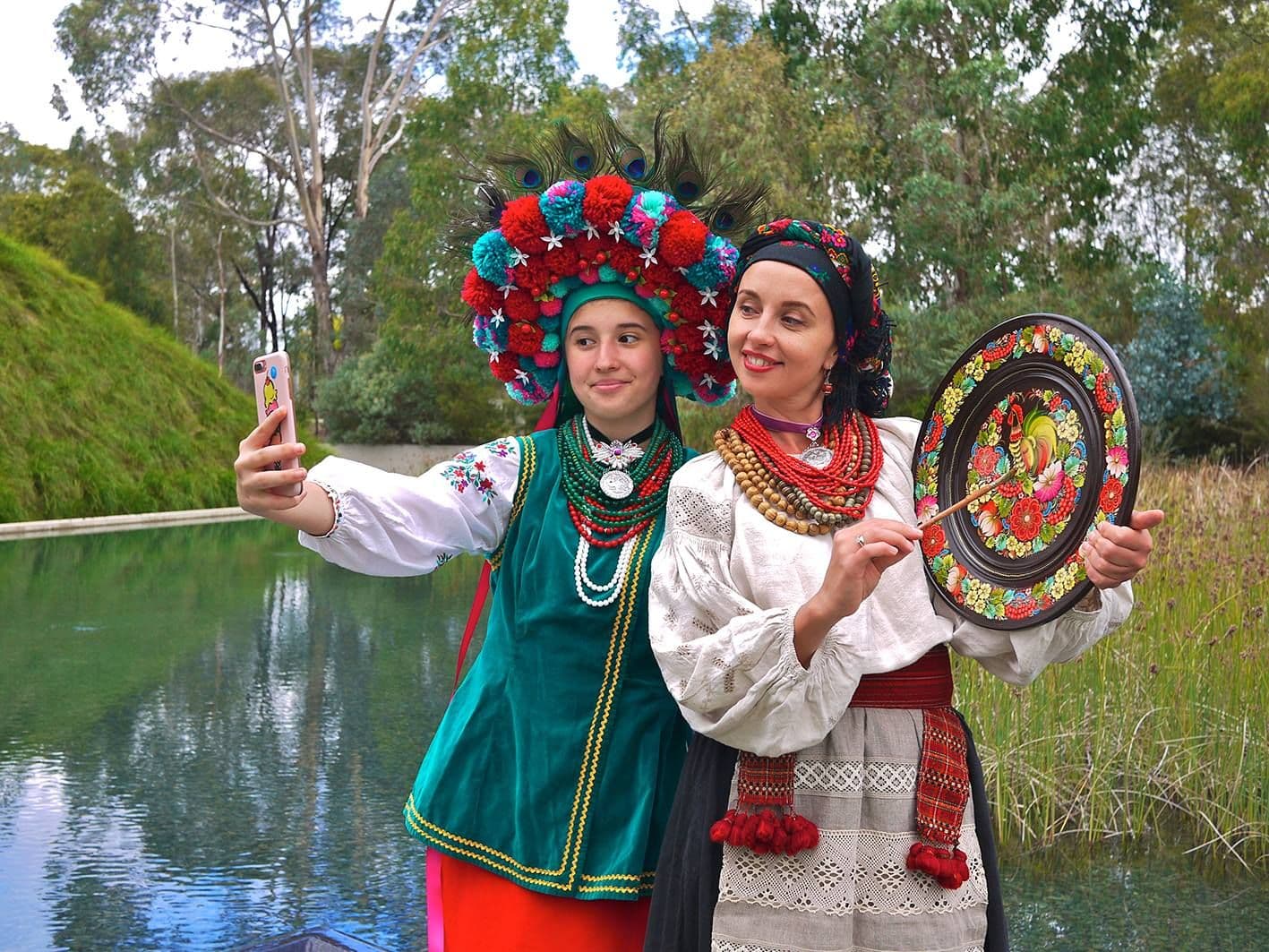
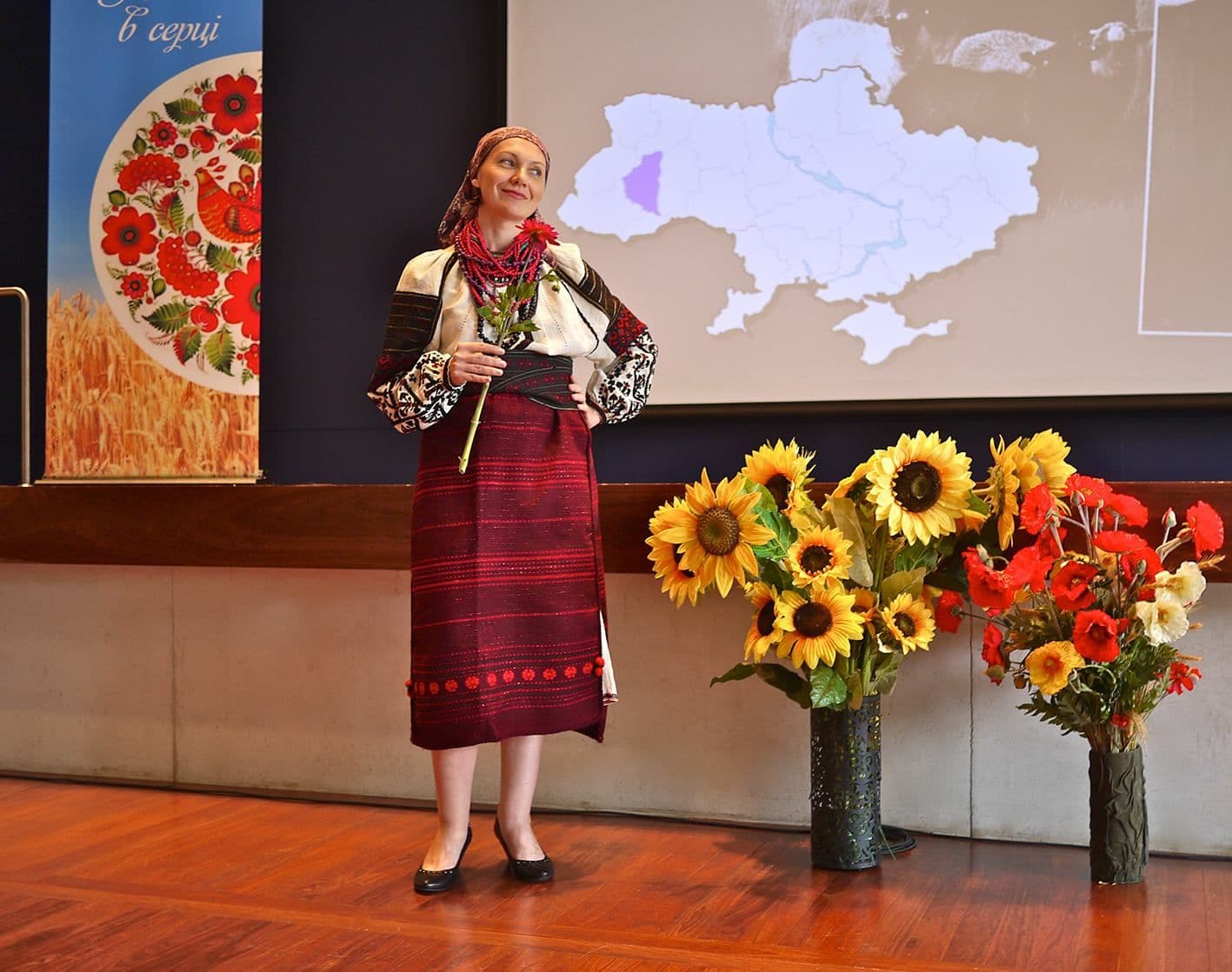
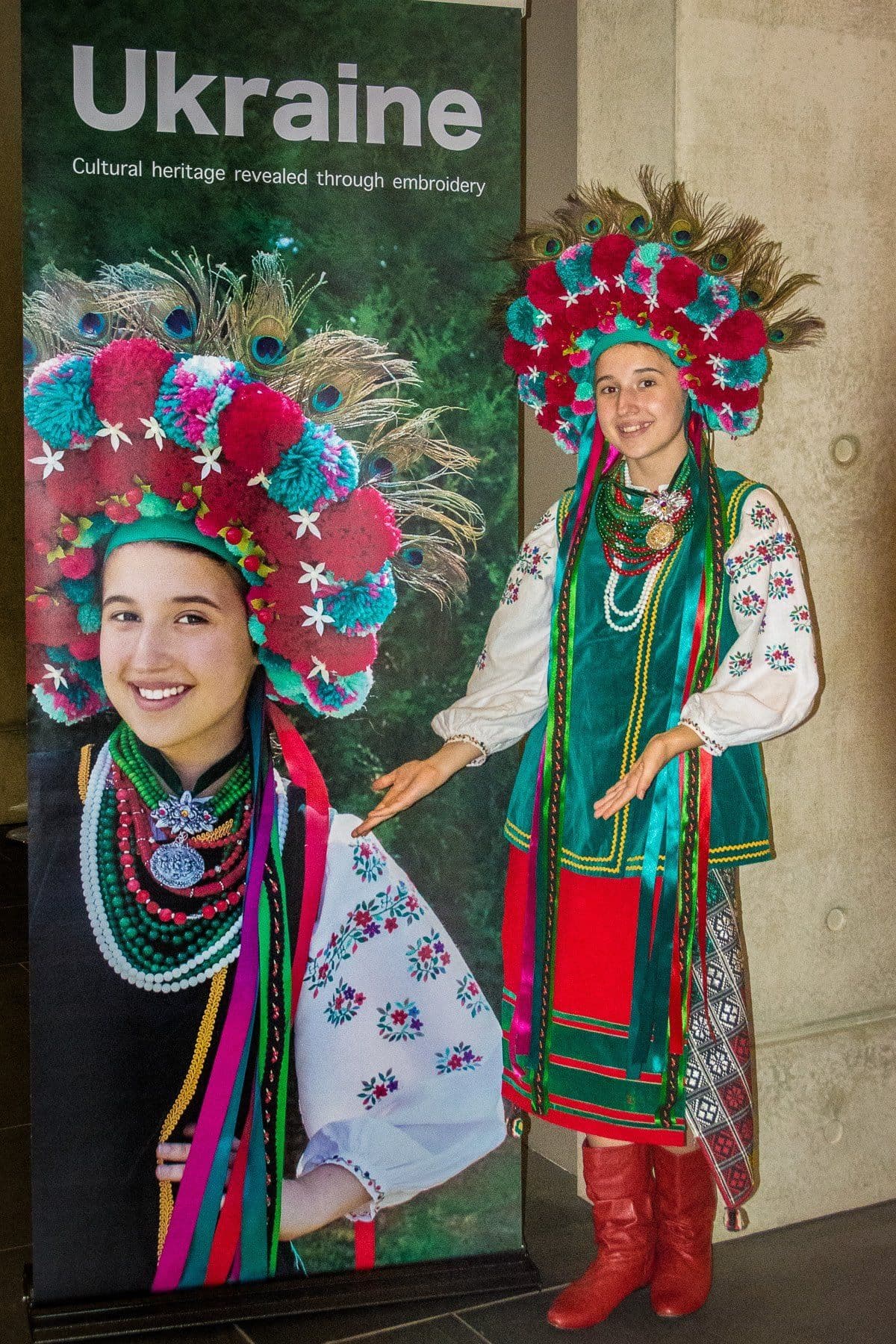
This project was far more than event coordination — it was about giving history a voice. Every costume, ornament, and movement carried memory, identity, and meaning. My role was to carefully weave these elements into a coherent narrative that honoured tradition while allowing it to live and breathe in the present moment.
I oversaw the entire creative and organisational process: selecting traditional Ukrainian costume elements, sourcing authentic garments and objects from private collectors, and recreating historical headpieces and jewellery where originals could not be used. I wrote the presentation script to guide the audience through the story, and designed all visual and printed materials — from slides and banners to invitations, gifts, and calendars — ensuring a unified visual language throughout the event.
Behind the scenes, the work was equally intricate. I coordinated models and assistants, managed the careful transport of costumes and artefacts from Sydney to Canberra and back, and balanced countless logistical details so that, on the day, everything felt effortless and dignified.
What emerged was not simply a performance, but a living expression of cultural memory.
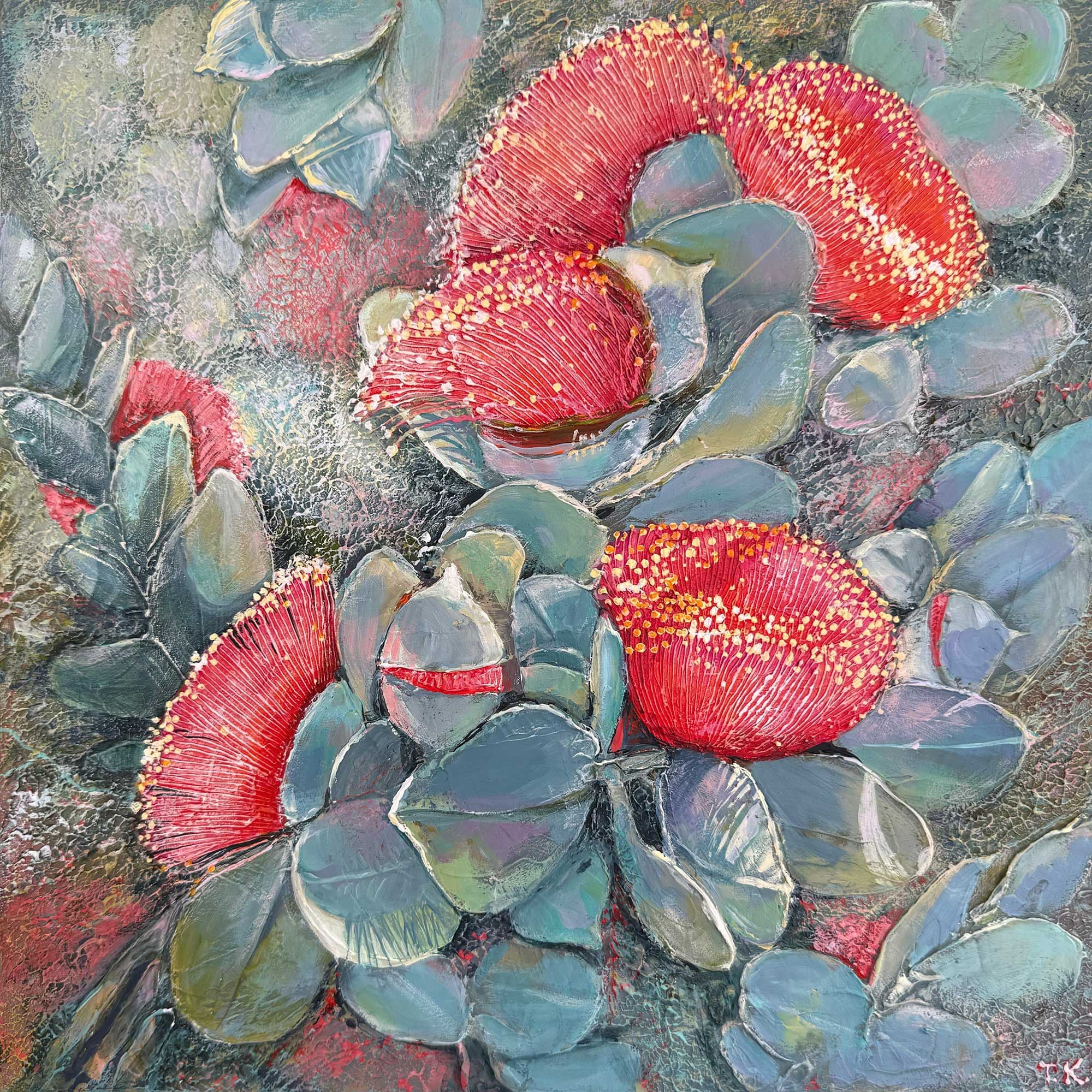
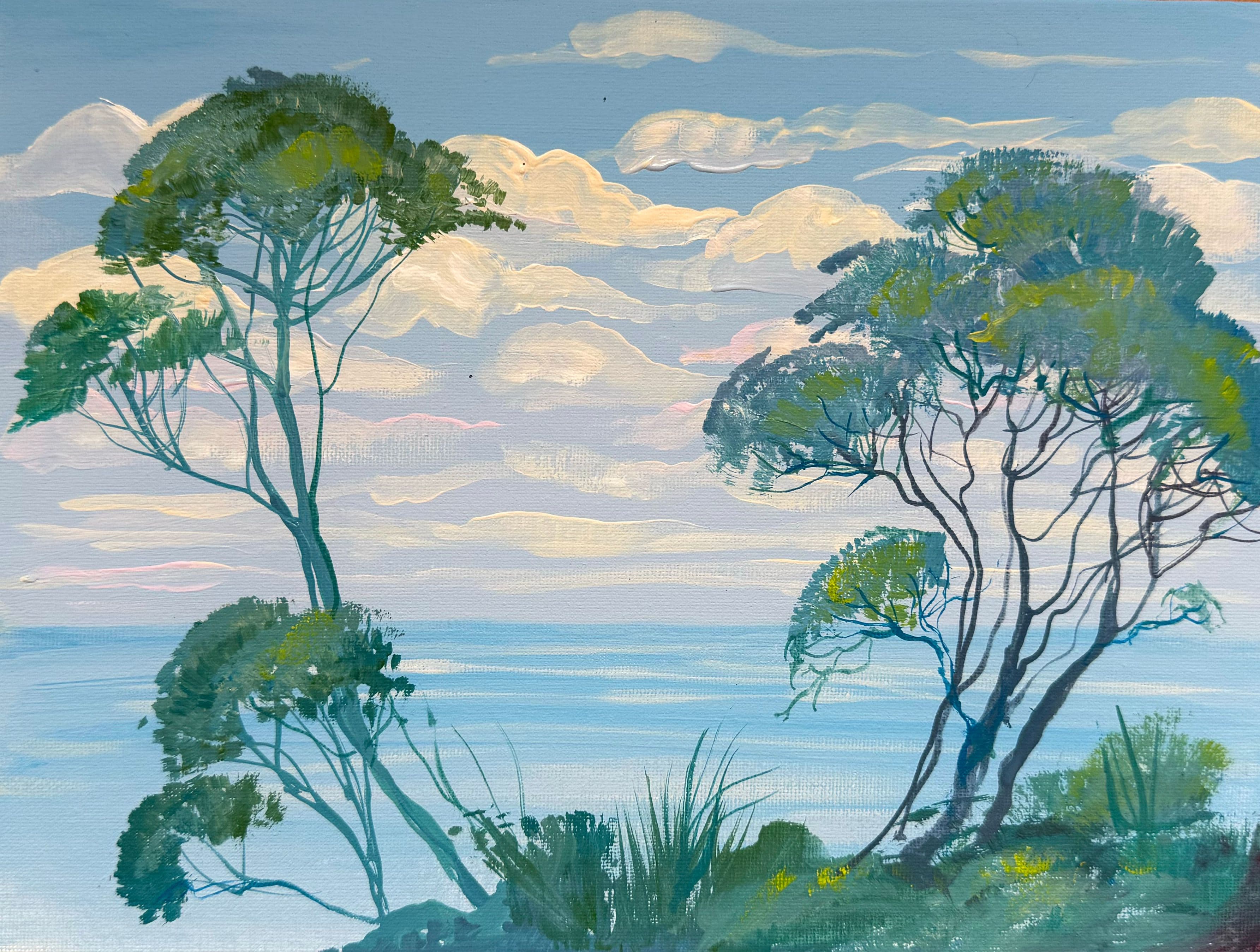
I am delighted to share that my artwork Light Between Us has been selected as a finalist in the North Sydney Winter Art Prize 2026. This piece continues my exploration of Australia's natural landscape through texture, light, and colour. Created with acrylic and texture paste on a wooden panel, Light Between Us invites viewers to pause and appreciate the quiet beauty found in nature and the subtle connections that exist between trees, light, and the people who experience them. Light Between Us 2026 Acrylic and texture paste on wood 30 × 30 cm The Winter Art Prize brings together a diverse collection of works by talented artists from across the region. It is an honour to have my work exhibited alongside so many inspiring artists.
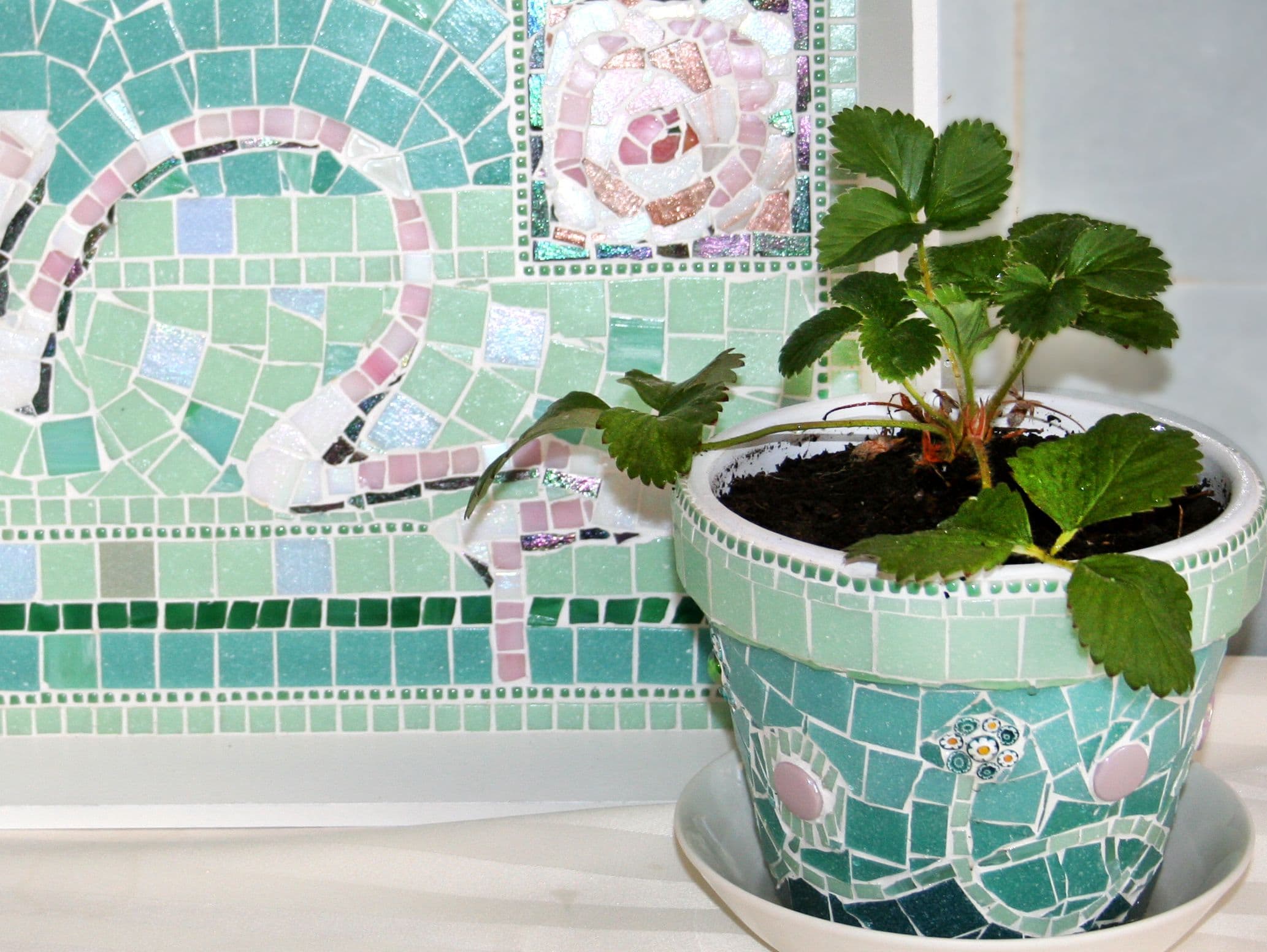
Mosaic has always fascinated me for its quiet complexity. There is something magical in planning to deconstruct a design into small pieces, only to assemble it again into a new whole. Each fragment carries its own presence, yet only truly comes alive in relationship to the others. Our eye moves naturally along the lines between the pieces, enjoying the rhythm of separation as much as the image they form together. We see the individual elements, the design they create collectively, and the spaces in between — all at once. That simultaneous experience is what makes mosaic so compelling to me: multifaceted, layered, and endlessly engaging. Beyond its visual richness, mosaic surfaces are also wonderfully practical. They are not afraid of a hot cup, a wet glass, a scratch, or a spill. This combination of beauty and durability is what makes mosaic especially appealing to me — art that can be lived with, touched, and used every day.