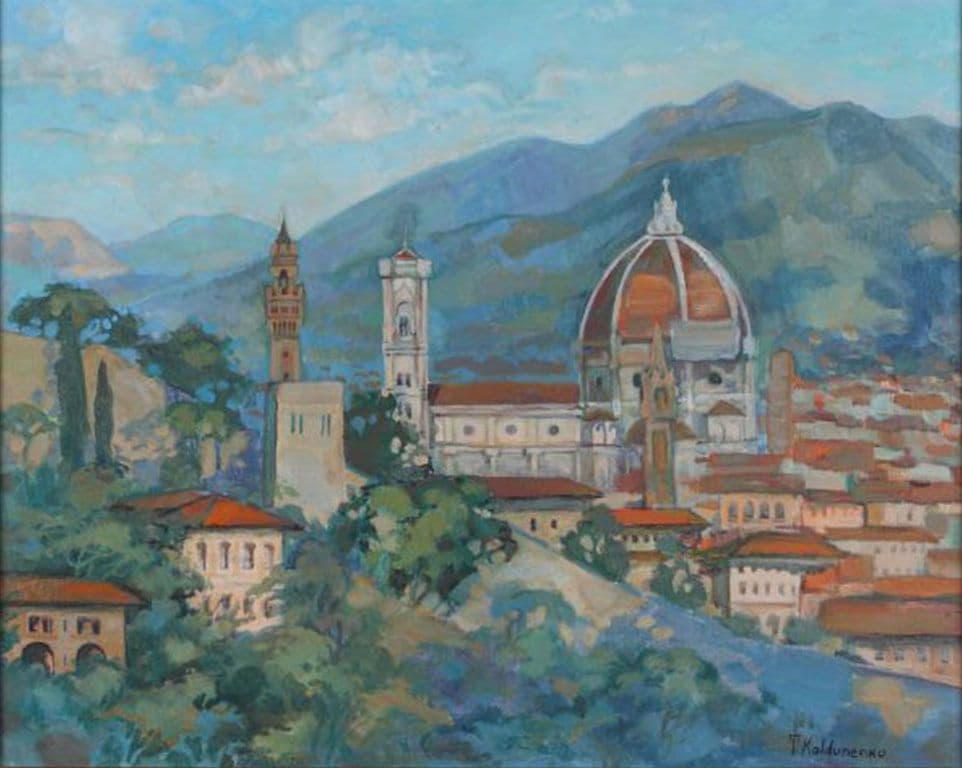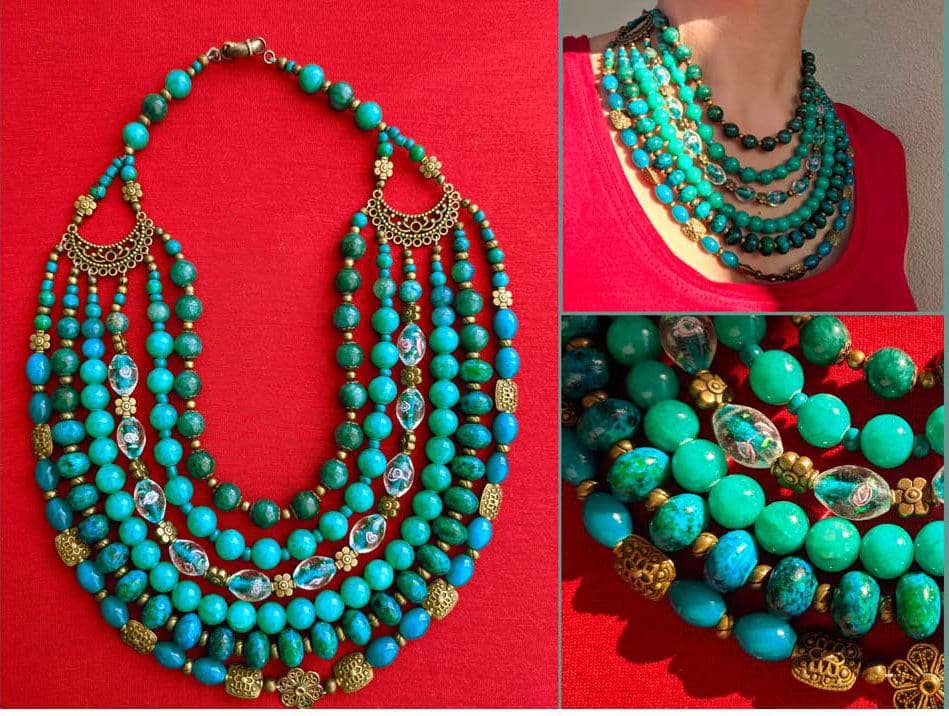
My journey with jewellery began in 2008, after a workshop in Kyiv sparked my curiosity about working on a small, intimate scale. What started as experimentation soon grew into a deeper fascination with adornment as both object and cultural expression.


My interest truly ignited while curating a fashion show of traditional Ukrainian clothing. Immersing myself in the richness of these garments led me to closely study traditional Ukrainian multi-row jewellery — its structure, symbolism, rhythm, and presence. These pieces are more than decoration; they carry history, identity, and a strong visual language.
Since then, I have created hundreds of jewellery pieces, each one informed by that tradition while shaped through my own contemporary sensibility. Working at this scale allows for precision, repetition, and variation — a dialogue between heritage and personal expression.
Jewellery, for me, is another way of telling stories through form and material — wearable, tactile, and closely connected to the body.


The exhibition True Blue & a Little Bit of Yellow at Gosford Community Gallery was the first of many we held during the first three years of Russia’s full-scale invasion of Ukraine. It marked a moment when art became a way to stand together, to act, and to help. Seven Australian artists of Ukrainian descent, all living and working in Australia, came together to sell artworks and raise funds for Ukrainians in need. The theme — blue and yellow — was both simple and deeply felt: a tribute to the ocean, to emotion, and to shared experience. We are endlessly grateful to everyone who visited, supported the exhibition, purchased artworks, or made a donation. This exhibition ran from 27 June to 1 July 2022, and it set the tone for everything that followed.
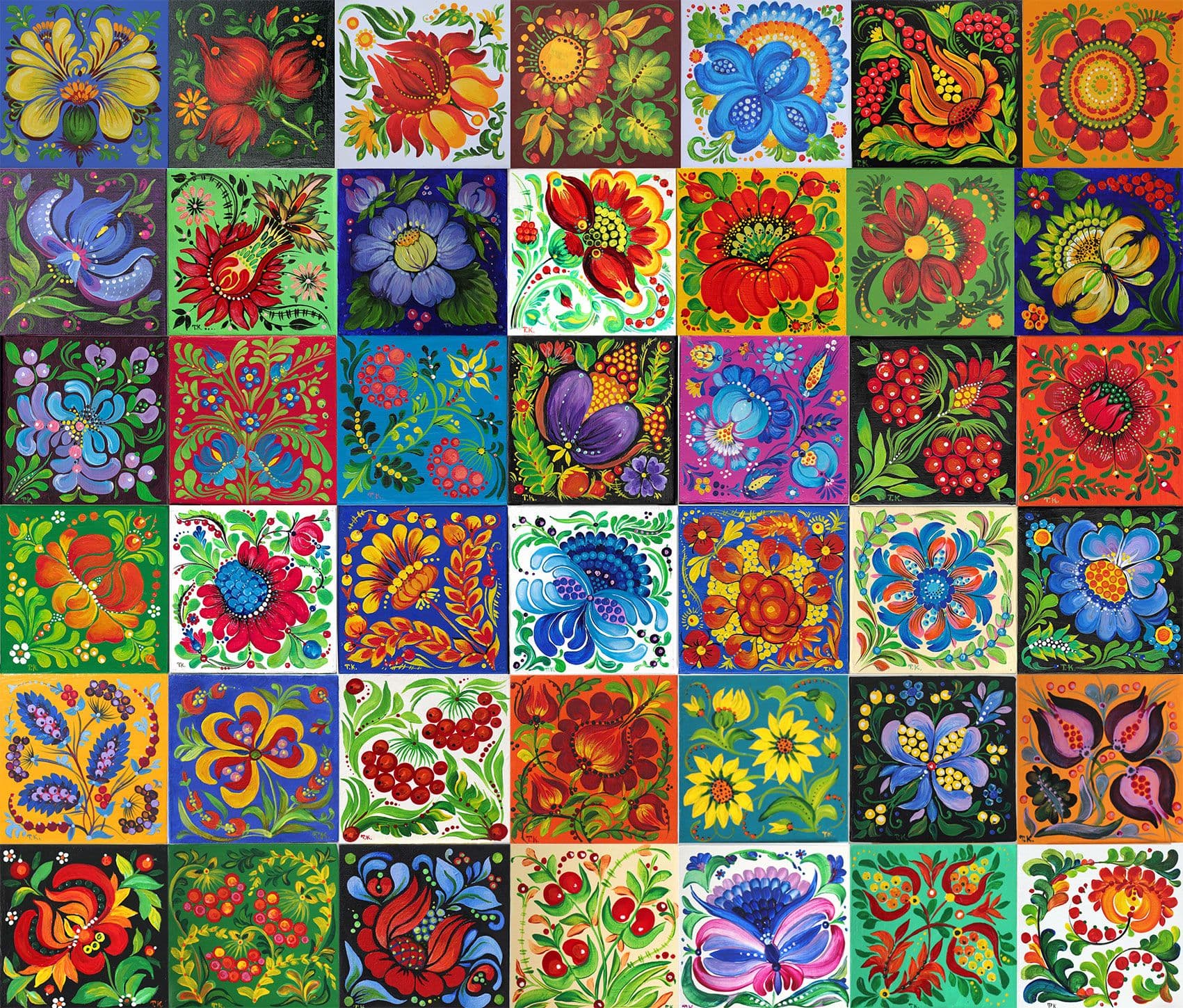
A Living Language of Colour. Petrykivka is a vibrant Ukrainian folk art style that originated in the village of Petrykivka. It is known for its intricate floral, natural, and animal motifs, traditionally painted on white backgrounds. These compositions symbolise harmony, life, and protection, and for generations have been used to decorate homes, everyday objects, and communal spaces. Today, Petrykivka is recognised by UNESCO as Intangible Cultural Heritage, acknowledging its role in preserving cultural identity through decorative painting. This tradition has always been close to my heart. What distinguishes Petrykivka from other painting styles is the way it is created — everything is built from expressive brushstrokes that feel like footprints left by different brushes and tools, sometimes even fingertip marks. Each stroke is visible, intentional, and alive, forming complex patterns through simple gestures. Petrykivka is also unapologetically colourful, ornate, and joyful. Its energy comes from abundance rather than restraint, from movement rather than symmetry. These qualities resonate deeply with me. They speak of celebration, optimism, and a connection to nature that feels both playful and profound. For me, Petrykivka is more than a decorative style. It is a visual language that carries memory, emotion, and identity — one that continues to inspire my work and reminds me of the power of colour, rhythm, and hand-made marks to tell stories across time and place.