Every so often, a commission opens the door to an entirely new way of thinking. One such moment came when a client asked for something unexpected — a lightweight, sculptural object in the form of puppets.


Creating puppets became an unusual and exciting way for me to explore my creativity. They sit somewhere between sculpture, design, and storytelling. Unlike painting, where the surface holds the narrative, puppets demand attention to volume, balance, texture, and movement. Even at rest, they suggest gesture, character, and presence.
Working on these pieces allowed me to think beyond the wall and the frame, translating artistic ideas into tactile, three-dimensional forms. Each puppet became a small character — playful, expressive, and full of personality.
This unexpected direction reminded me how important it is to stay open as an artist. New materials, new formats, and new requests can lead to discoveries that expand both practice and imagination — sometimes in the most surprising ways.


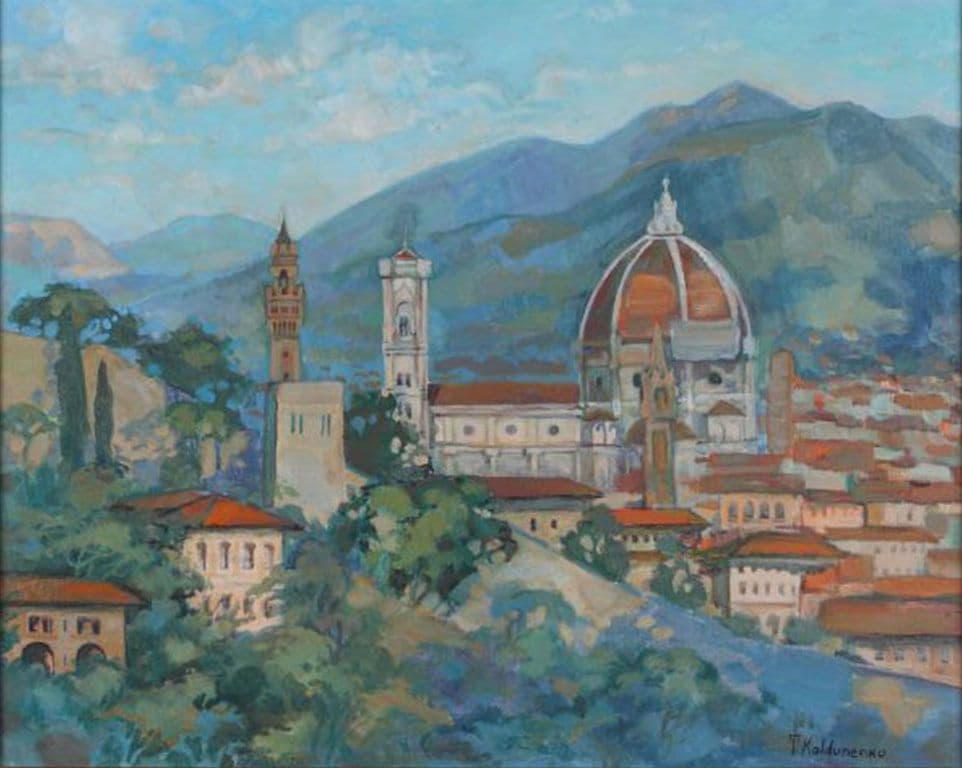
My journey with oil painting began in year 7, when I was studying at the State Secondary Art School in Kyiv, Ukraine — a highly selective school that required passing three entrance exams in painting, drawing, and composition. It was there that we transitioned from watercolours and gouache to the timeless medium of oils. I’ve always loved this classical medium. Oils have a long and rich tradition in fine art, and I’ve admired their depth, luminosity, and the way colours blend so seamlessly on the canvas. Working with oils teaches patience and reflection — they dry slowly, giving time to build layers with care and intention. I feel incredibly fortunate to have received proper academic training in the classical use of oils, alongside in-depth knowledge of anatomy, linear perspective, perception principles, and art history. That foundation continues to shape how I see and create today, allowing me to appreciate not only the technique but also the discipline and history behind every brushstroke.