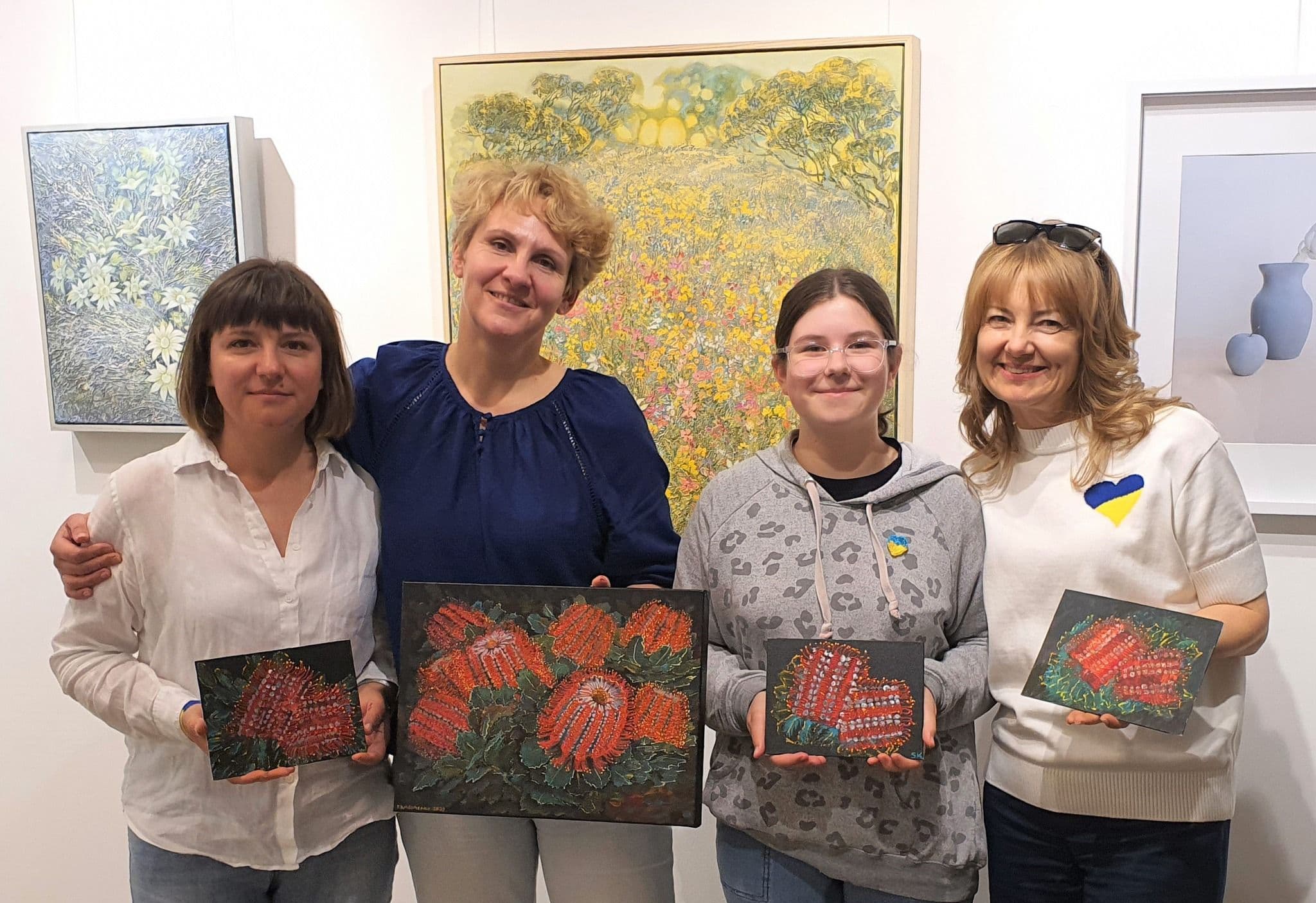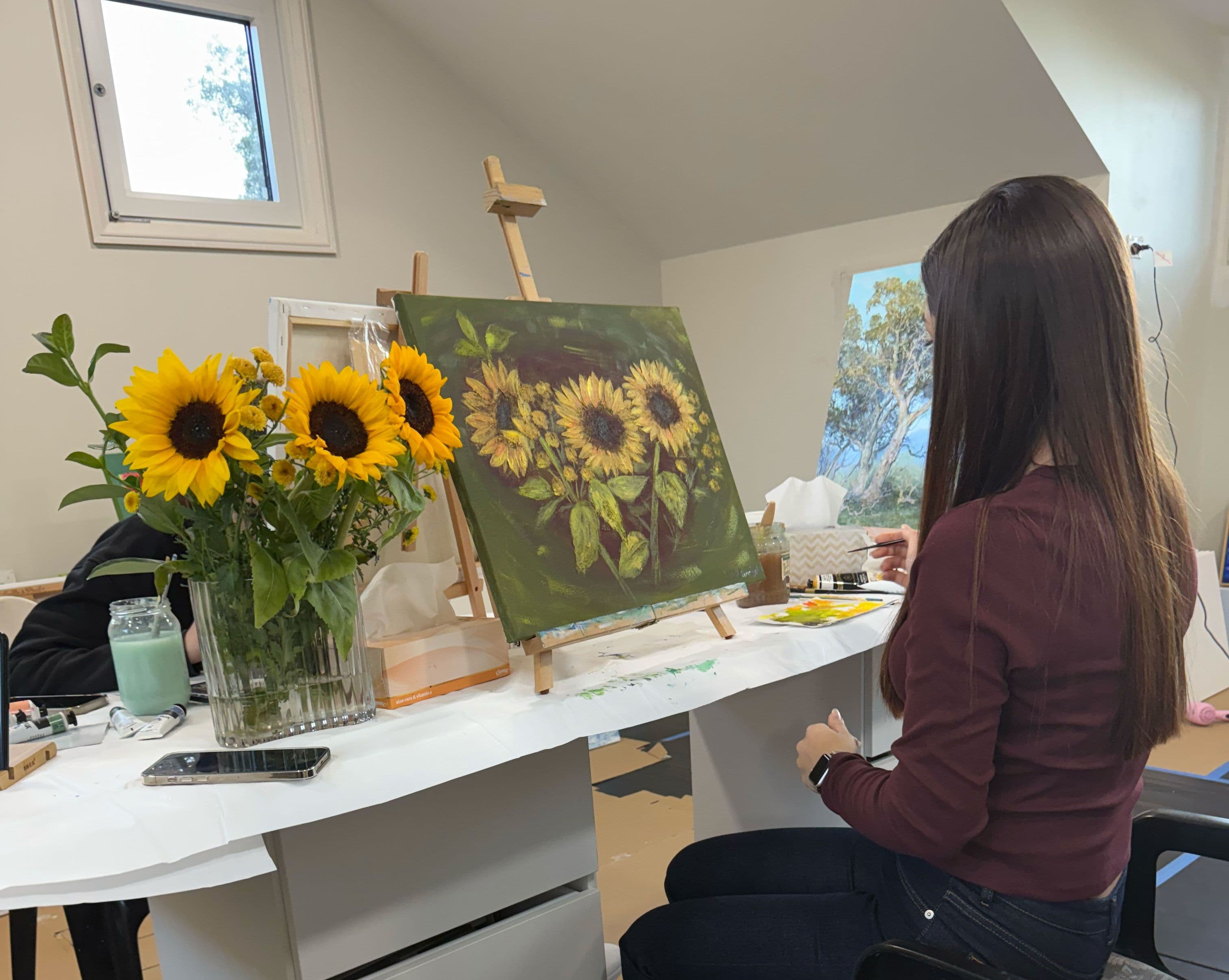
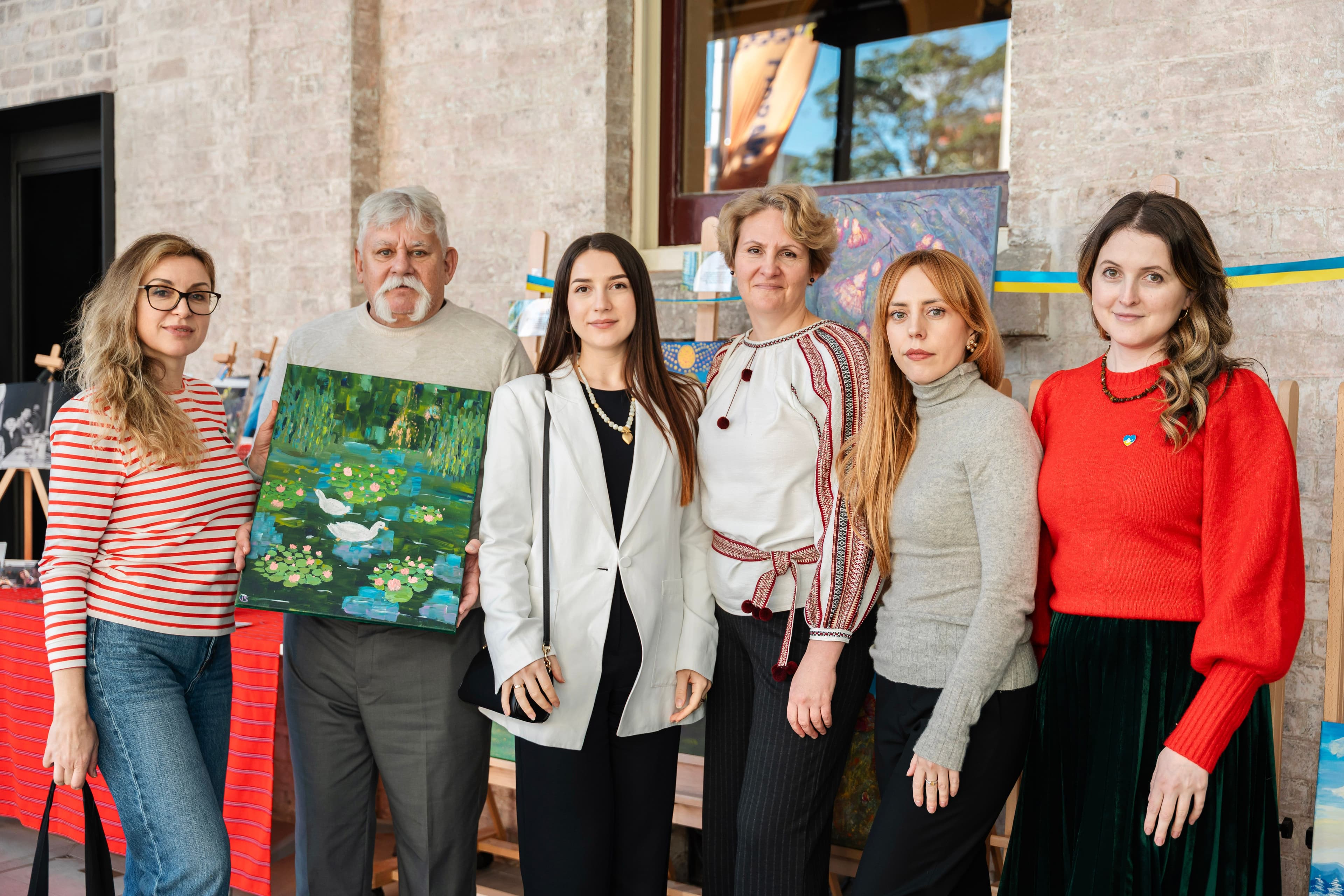
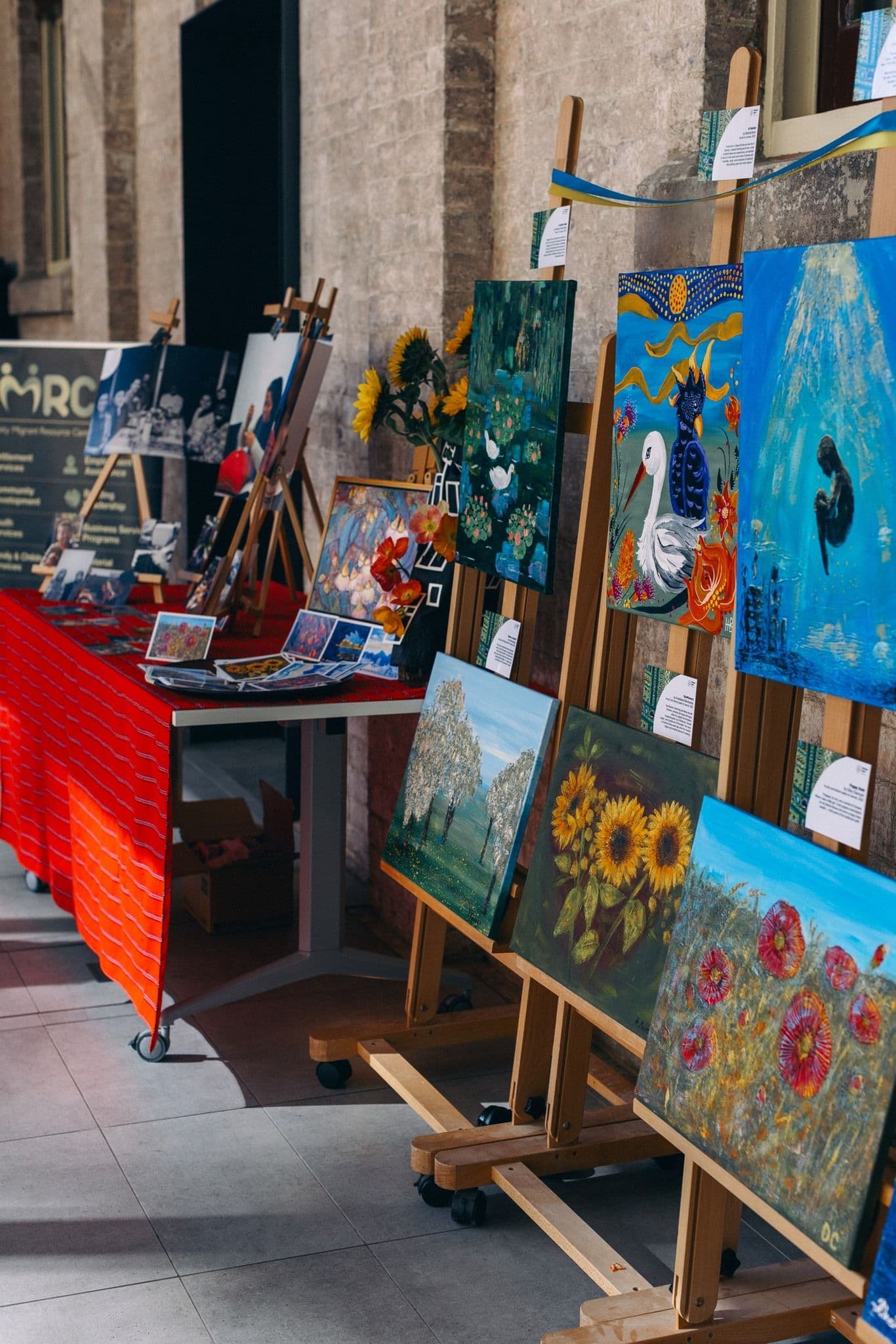
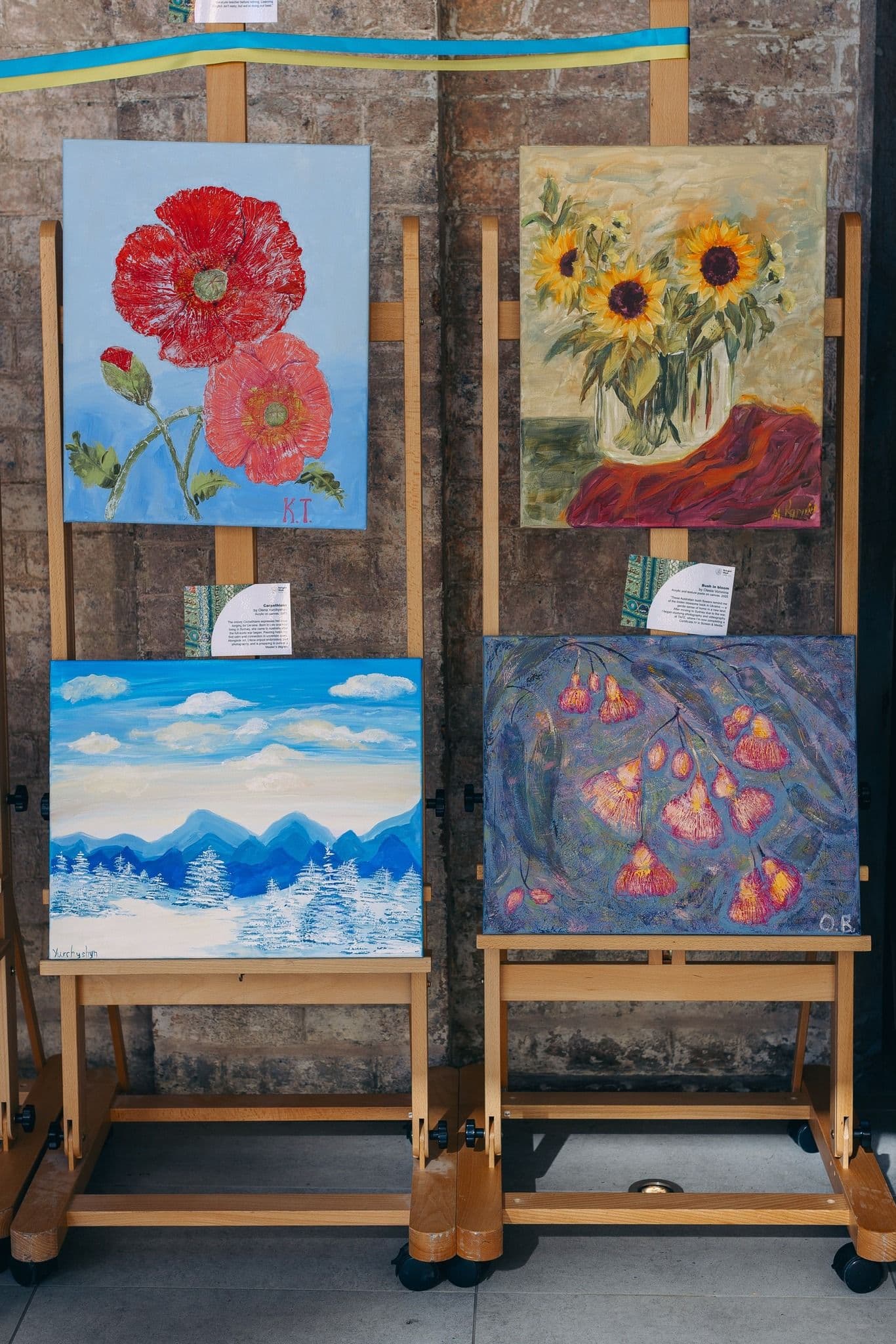
Sometimes, I run very small, intimate workshops—just three participants—so each person can explore their own individual theme. This particular workshop was organised and sponsored by CMRC and contributed to the exhibition Borders, Bonds, Belonging, held at Ngurra Gunya Exhibition Hall, Parramatta Square. The exhibition, organised by CMRC and ADSi, was part of #RefugeeWeek2025 — a time to reflect, connect, and stand in solidarity amid global displacement and conflict.
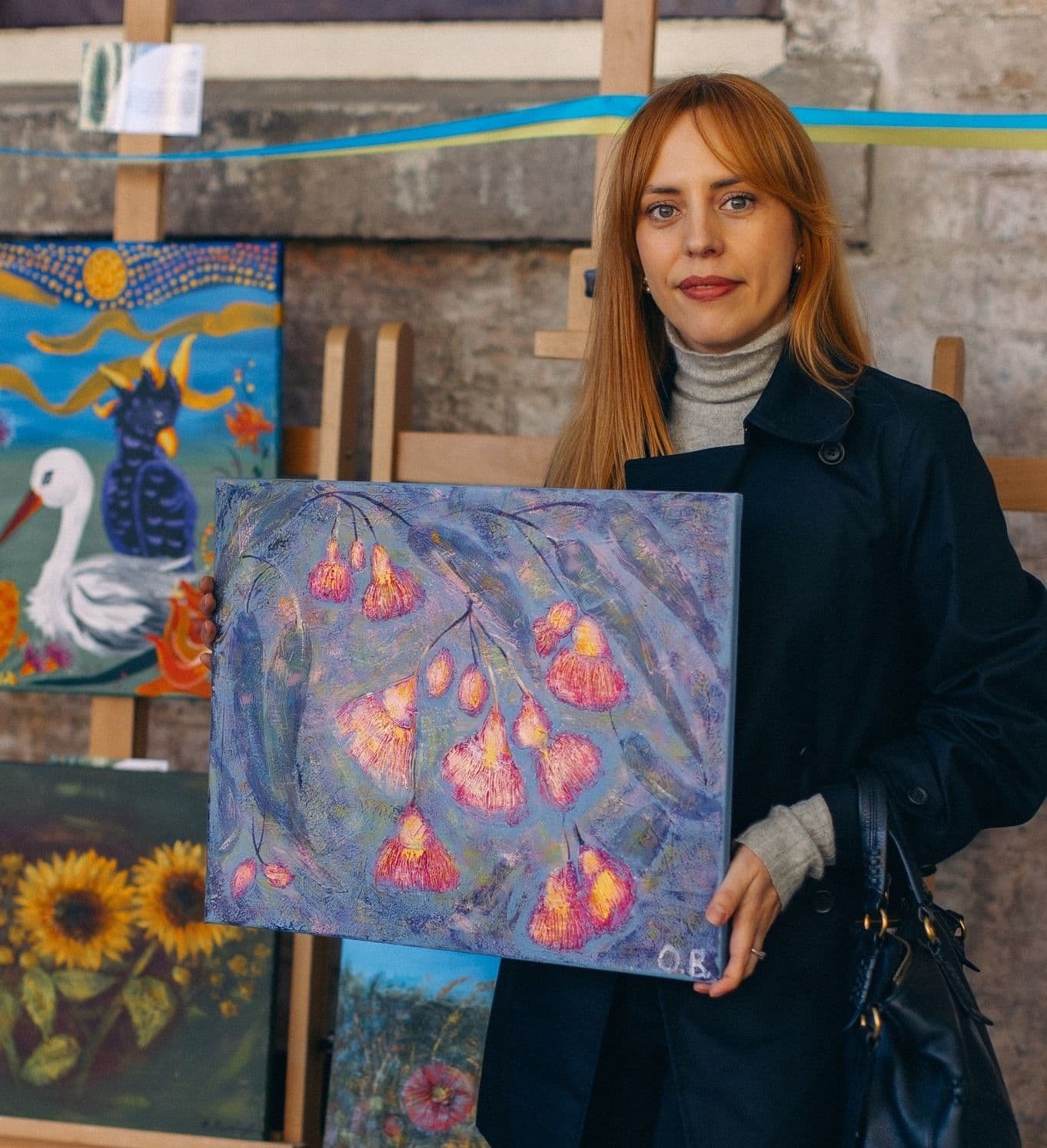
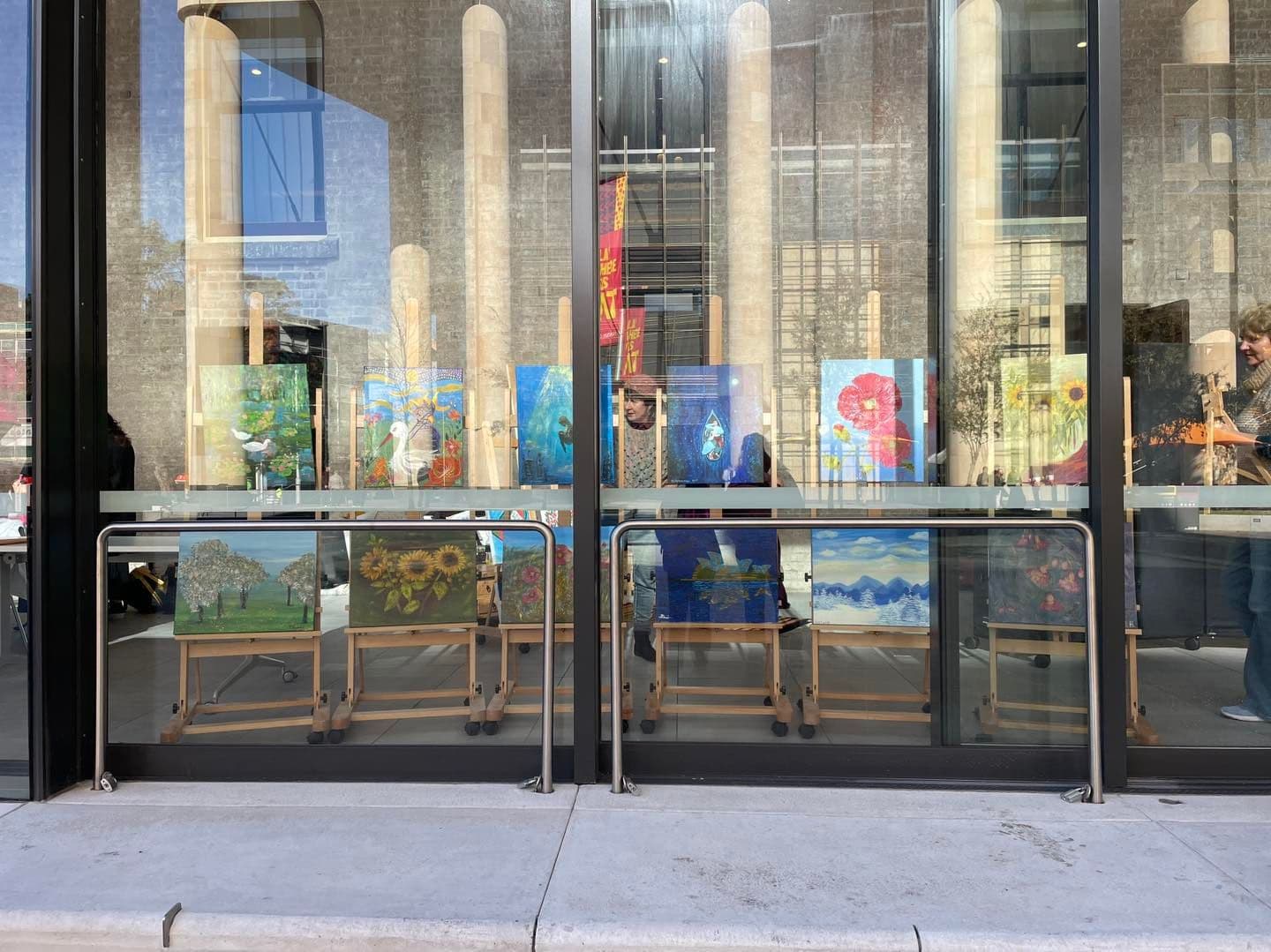
Twelve talented Ukrainians shared their culture through paintings, music, and poetry, creating a powerful celebration of identity and resilience.
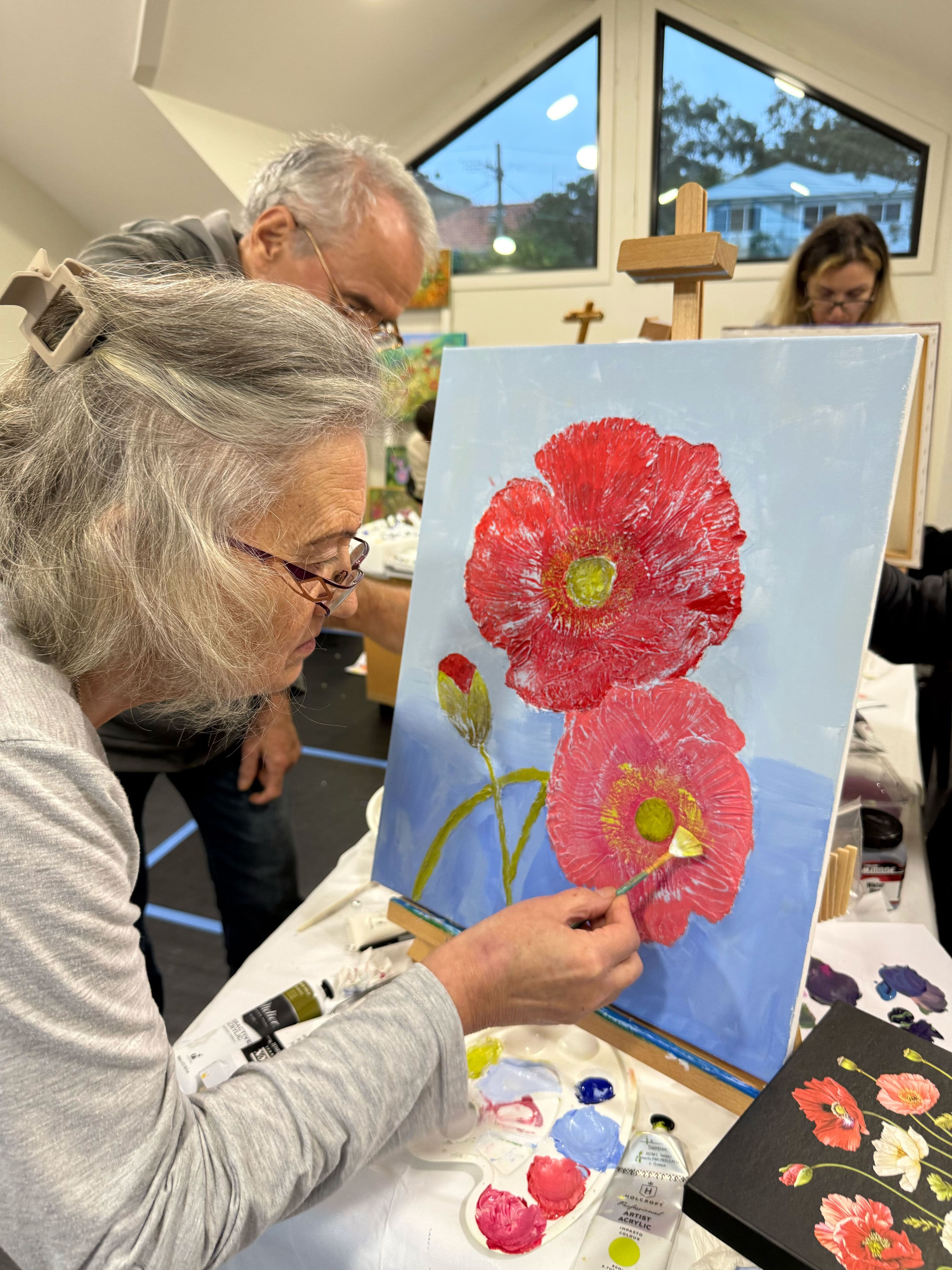
Our workshop took place in my art studio, which conveniently had all the supplies ready. The theme was open: participants could explore anything that reminded them of Ukraine or anything particular they love about Australia. The results were personal, heartfelt, and inspiring — a true testament to the power of creativity in connecting people and cultures.
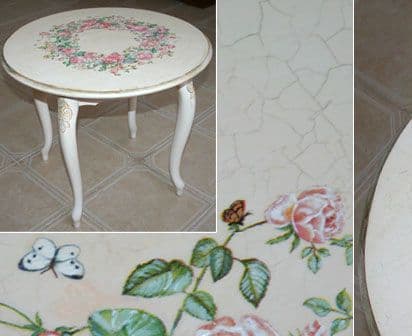
Furniture Decoration — Art You Can Live With. Working with furniture brings me a particular kind of joy. Three-dimensional objects are experienced from all sides, revealing a different picture as you move around them. There is something deeply satisfying about applying art to forms that are not only observed, but used and lived with every day. Chairs, tables, cabinets, and screens become surfaces where colour, texture, and form extend beyond the wall. Decorated furniture has the power to anchor a room. It can become a focal point, decisively unify a colour palette, or bring cohesion to an interior style. When art moves into functional objects, it becomes part of daily rituals, adding character and warmth to everyday moments. The process becomes even more meaningful when an old piece is given a second life. Repairing, recolouring, redesigning, reimagining, and reusing transforms something forgotten into something personal and renewed. Furniture decoration is, for me, a way of combining creativity with care — honouring what already exists while shaping it into something fresh, purposeful, and full of story.
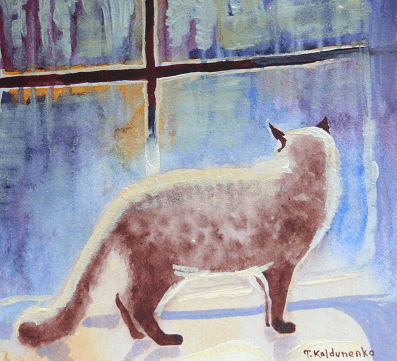
In the fifth grade, I first tried watercolour painting—and it instantly became a source of immense joy. The way the pigments danced and blended on paper felt like magic. I discovered that watercolours have a mind of their own: their fluidity and unpredictability invite collaboration rather than control. Over the years, this dialogue between brush, water, and pigment has stayed with me. Every time I pick up a watercolour brush, I’m reminded of that first spark of discovery in year 5—the joy of watching colours flow freely, forming something beautiful and unexpected. My journey with art didn’t stop there. I’ve dedicated my entire life to studying and working with various materials—acrylics, oils, texture pastes, and more—each offering its own challenges and rewards. Yet watercolour remains my first love, the medium that taught me to trust the process and embrace the beauty of imperfection. Even today, that simple act of dipping the brush in water brings not only pigments to paper but also a flood of memories, a quiet sense of gratitude, and a profound satisfaction that has endured since those early school days.