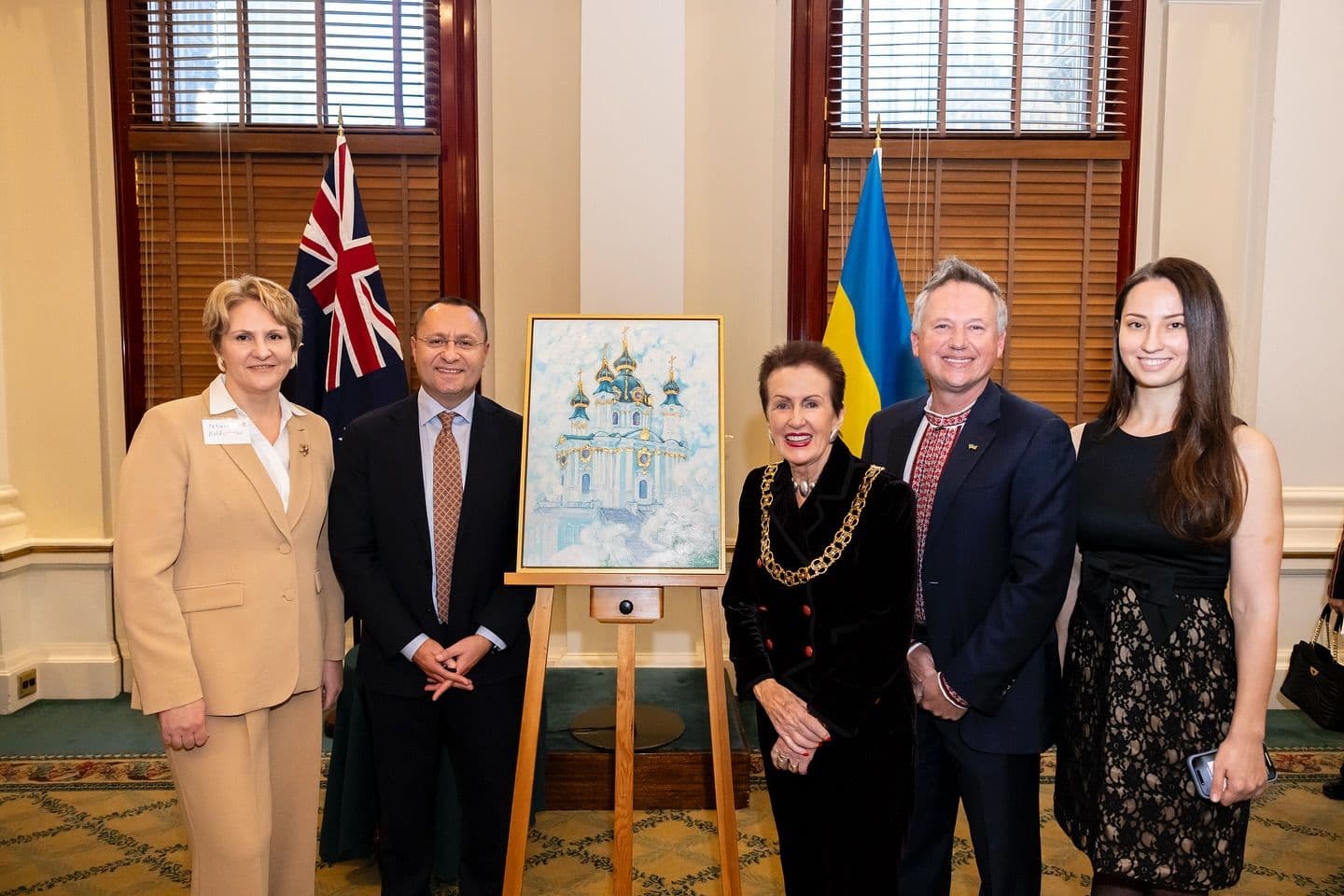
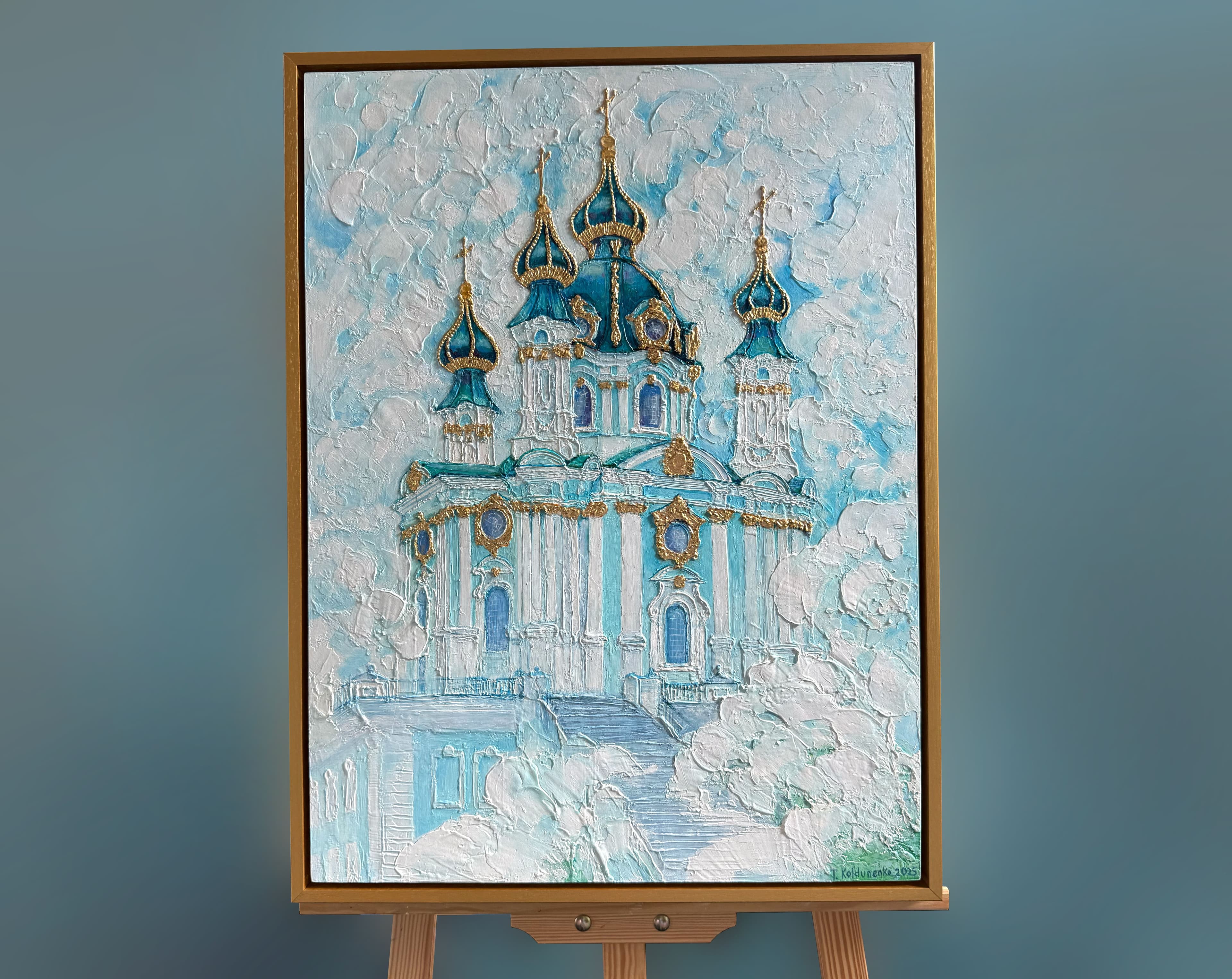
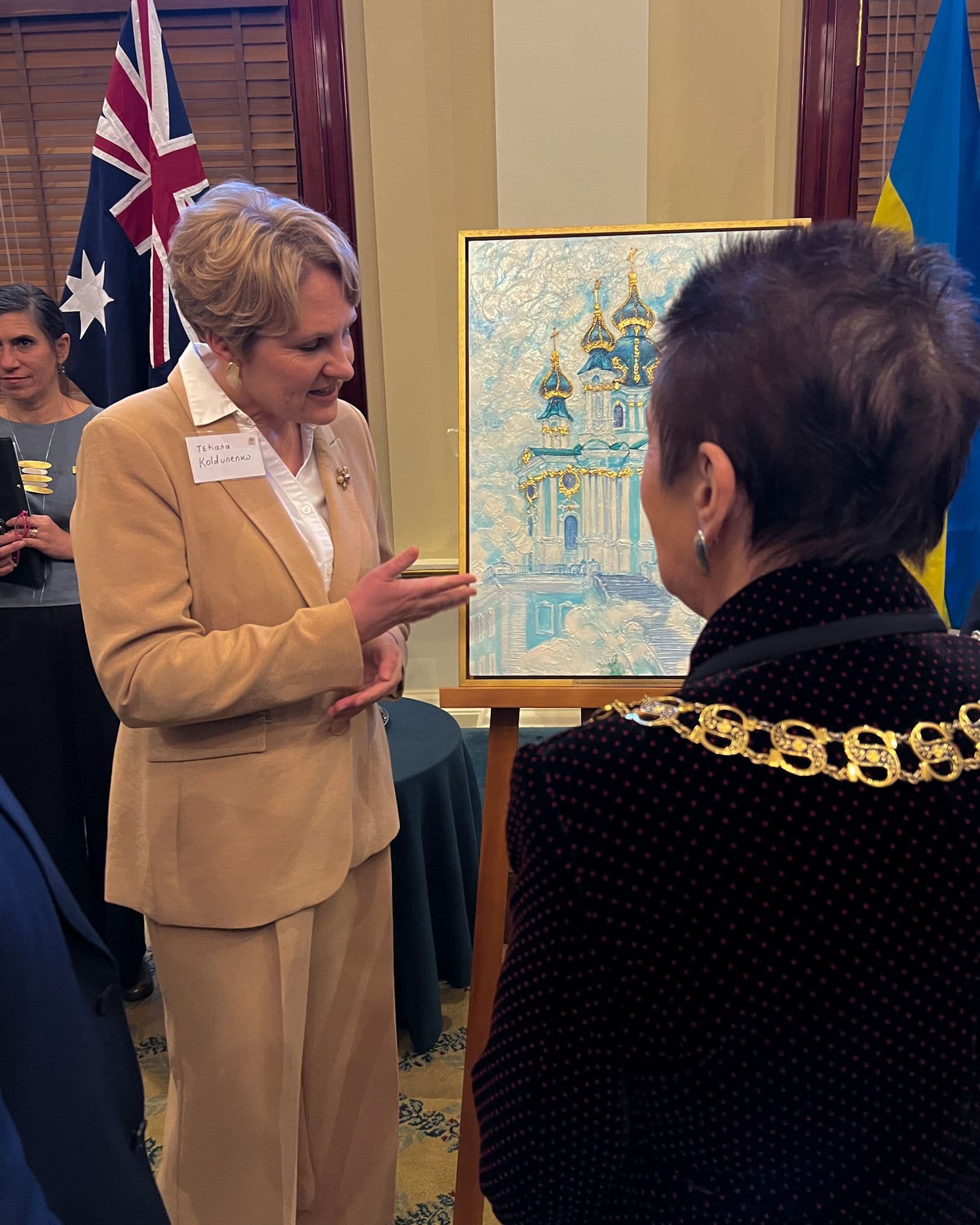
I’m deeply honoured that my painting, St. Andrew’s Church in Kyiv, Ukraine is now part of the City of Sydney Civic Collection.
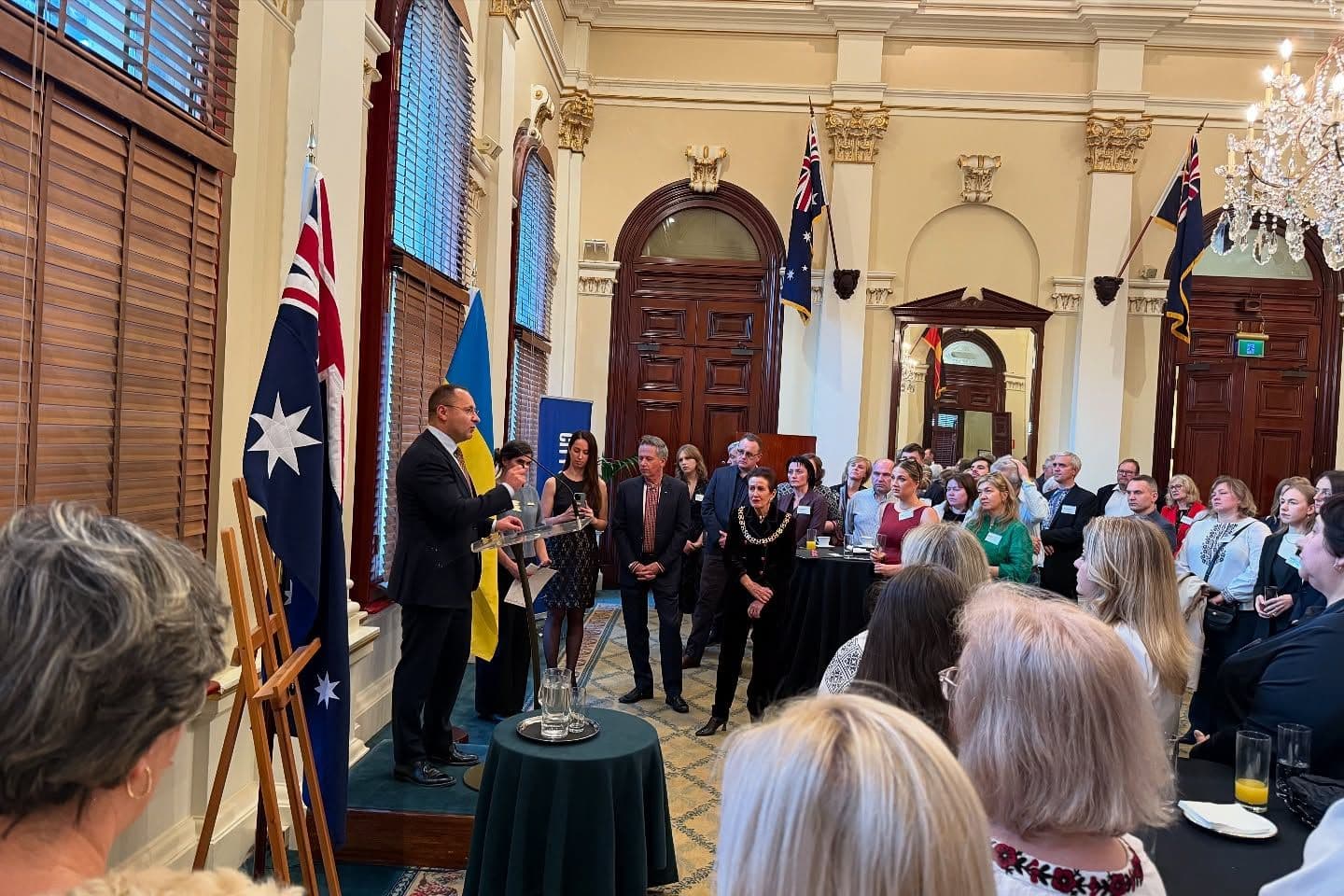
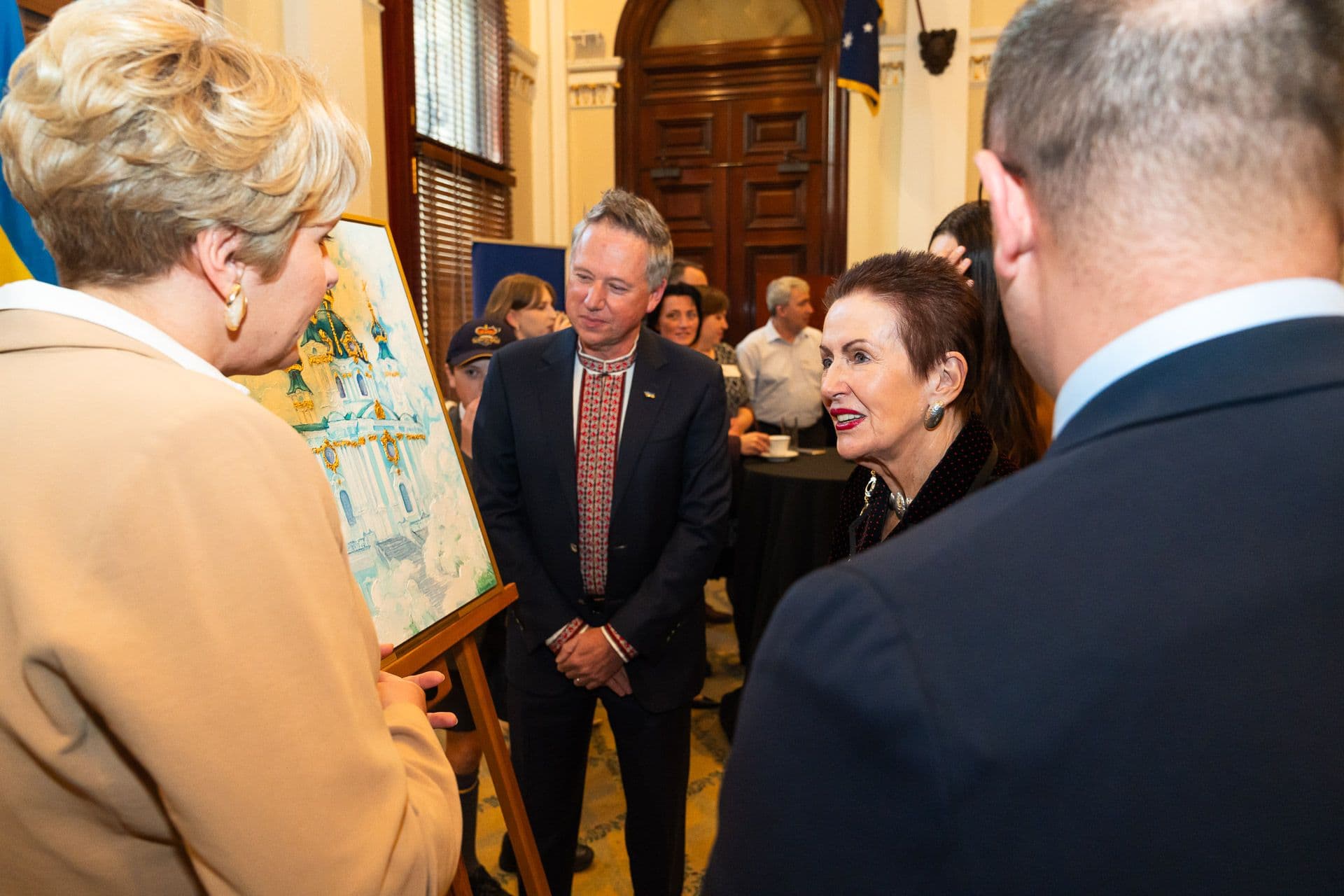
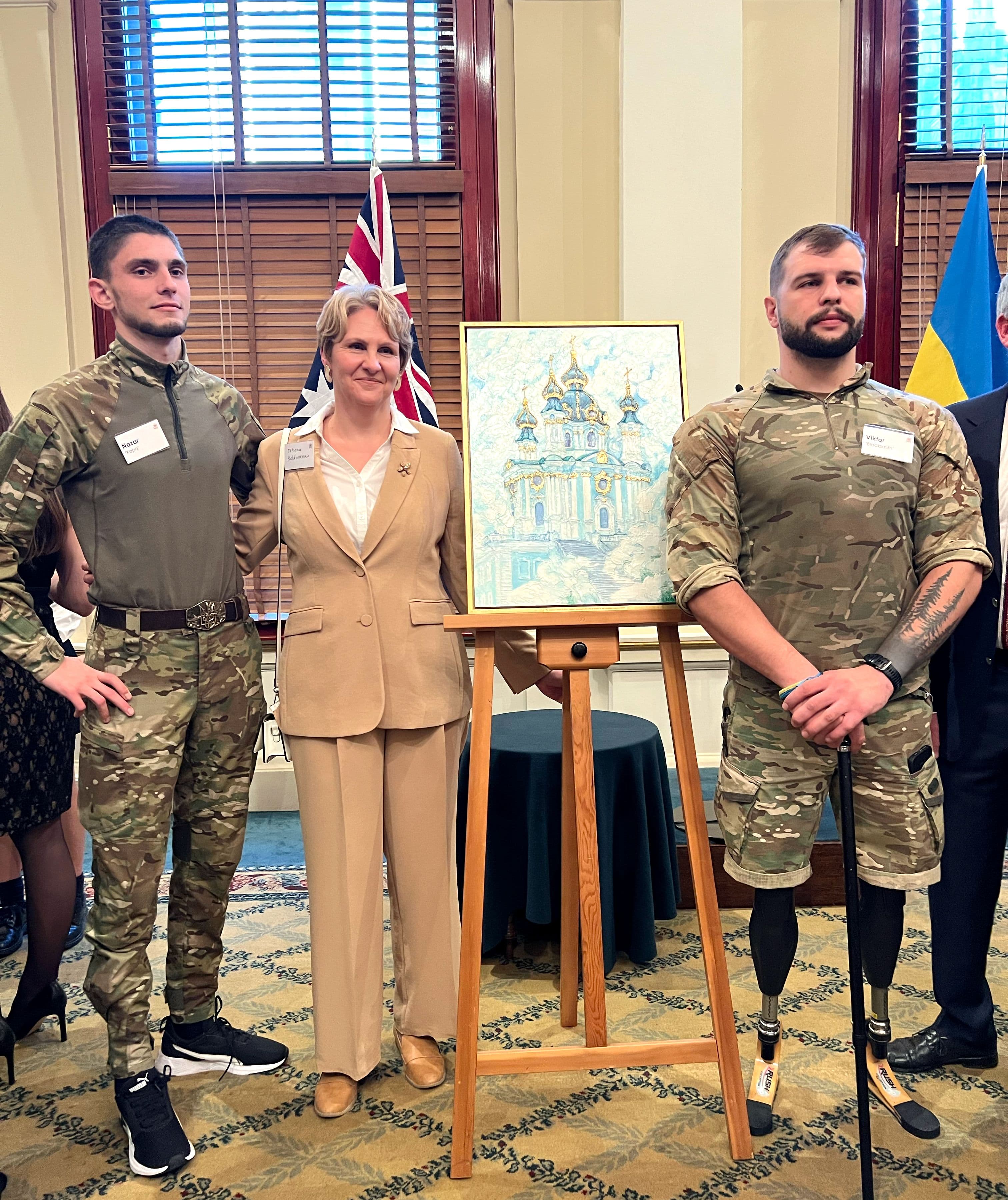
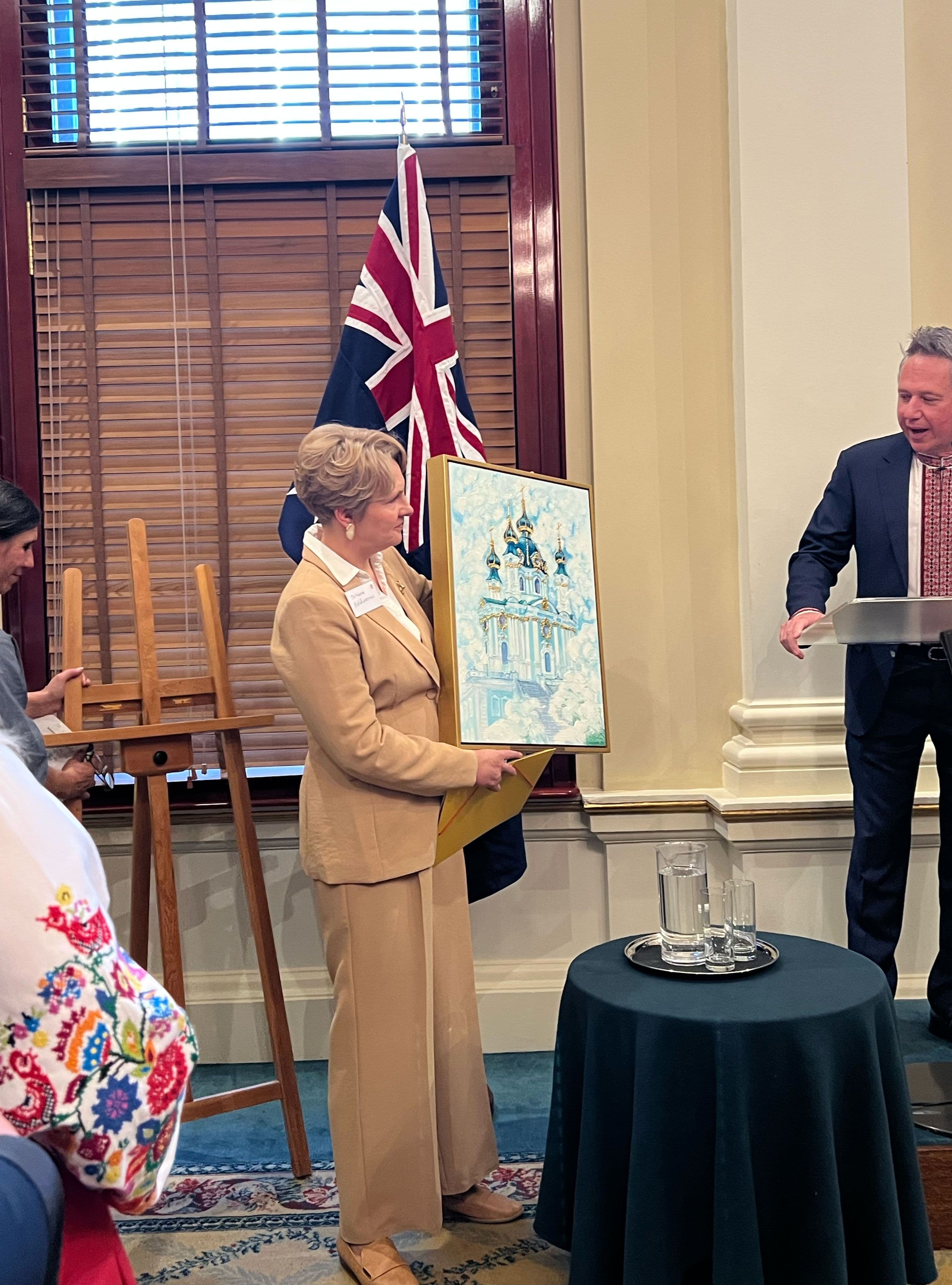
This artwork was officially presented in May 2025 by Andrew Mencinsky, President of the Ukrainian Council of NSW, to Lord Mayor Clover Moore and the City of Sydney—a gesture of gratitude for their ongoing support of displaced Ukrainians and our community since the beginning of Russia’s full-scale invasion in 2022.
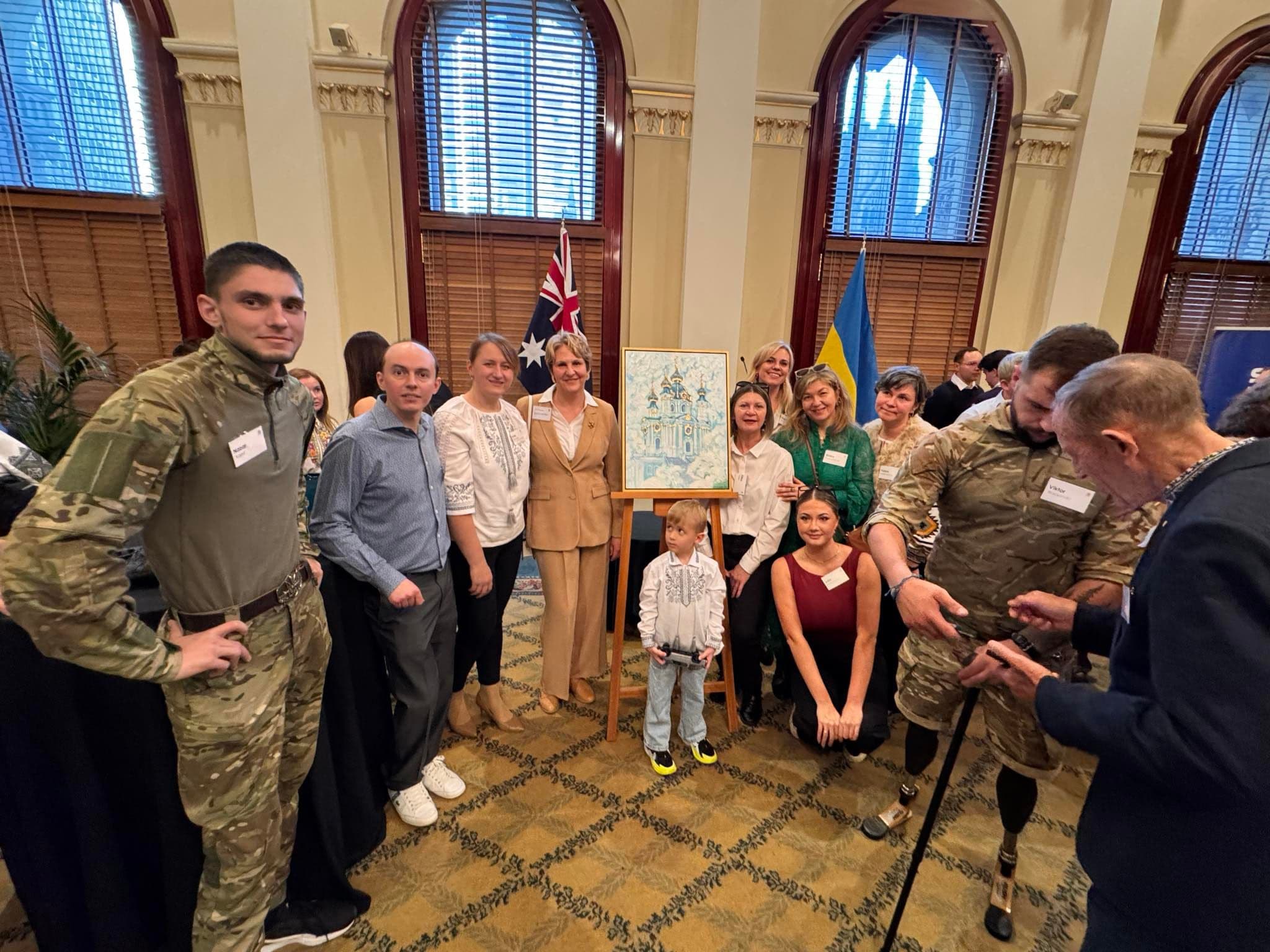
St. Andrew’s Church is a treasured Baroque gem of Kyiv, perched above the historic Podil district. Designed by Italian architect Francesco Bartolomeo Rastrelli in the 18th century, it stands as both a cultural icon and a spiritual beacon.
This church holds a special place in my heart — my mum and grandfather were born not far from it, and during my art school years we spent many plein air sessions painting around its beautiful grounds.
The presentation took place a month ago, but I was waiting for the official photos before sharing this moment with you.
Australia’s support of Ukraine and part of my home city Kyiv, now represented in Sydney’s civic collection means more than words can express.
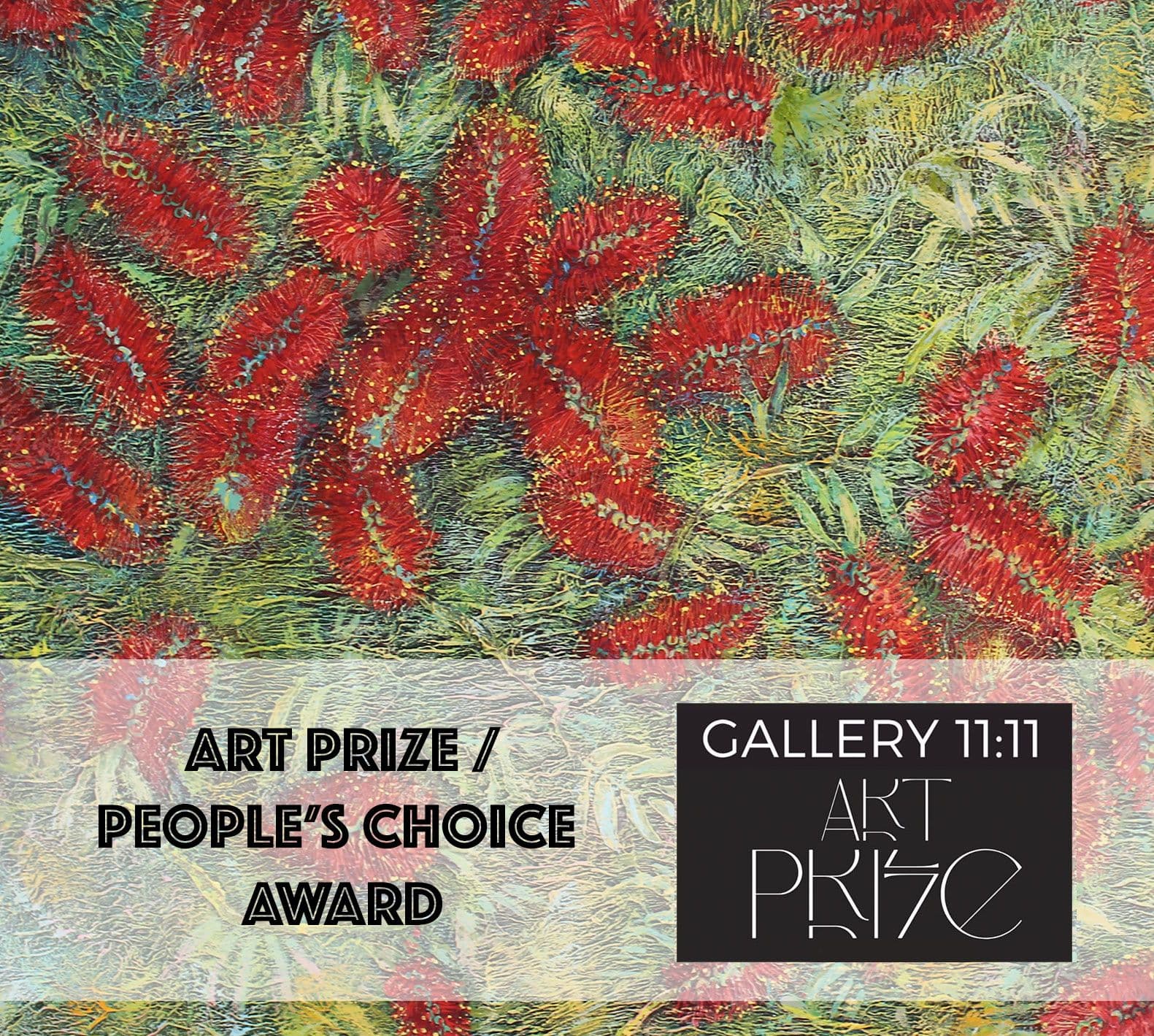
I’m delighted to share that my artwork “Bottlebrush Symphony” received the Gallery 11:11 Art Prize / People’s Choice Award! A heartfelt thank you to everyone who visited the exhibition, voted, and shared in this wonderful experience. Your support, encouragement, and kind words mean so much to me. The winning piece, “Bottlebrush Symphony,” will be available for purchase through the Gallery 11:11 website for the next eight weeks: www.gallery1111.net It was such a joy to celebrate this moment surrounded by art lovers, friends, and the creative community.
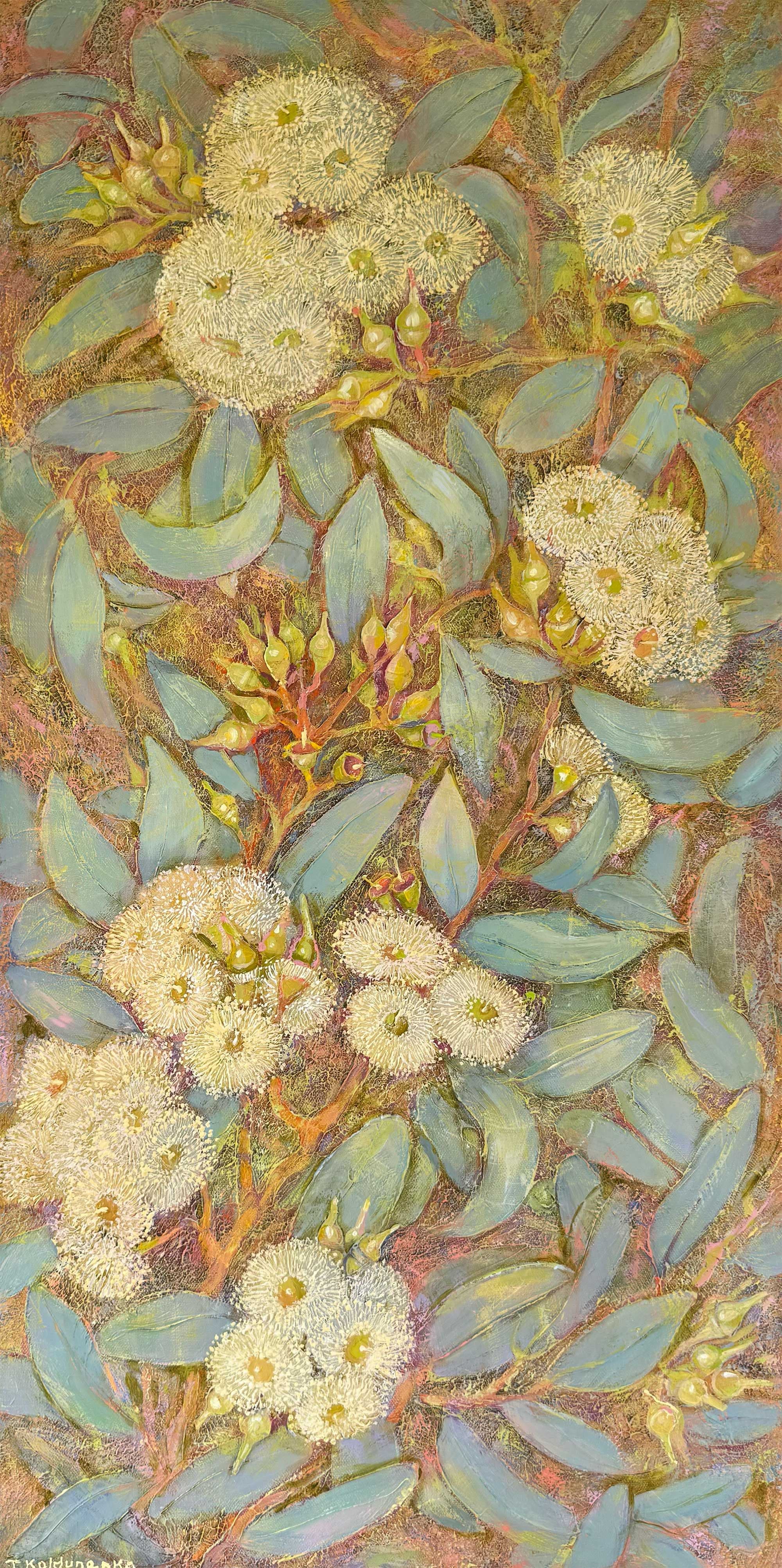
One question keeps coming up: what’s next? I’m delighted to share that my work has been selected as a finalist in the Hunters Hill Art Prize 2026. It’s an honour to be part of this exhibition alongside a strong group of selected artists, all coming together in the beautiful Hunters Hill Town Hall. The work I’ve entered, Soft Country — Eucalyptus Socialis, continues my exploration of Australian native trees — their presence, individuality, and the subtle complexity of their colour and form. If you’d like to see it in person, here are the exhibition details: Buyers’ Preview Thursday 21 May 2026, 7pm – 8pm Canapés and drinks available Opening Night Friday 22 May 2026, 6pm – 8pm Canapés and drinks available