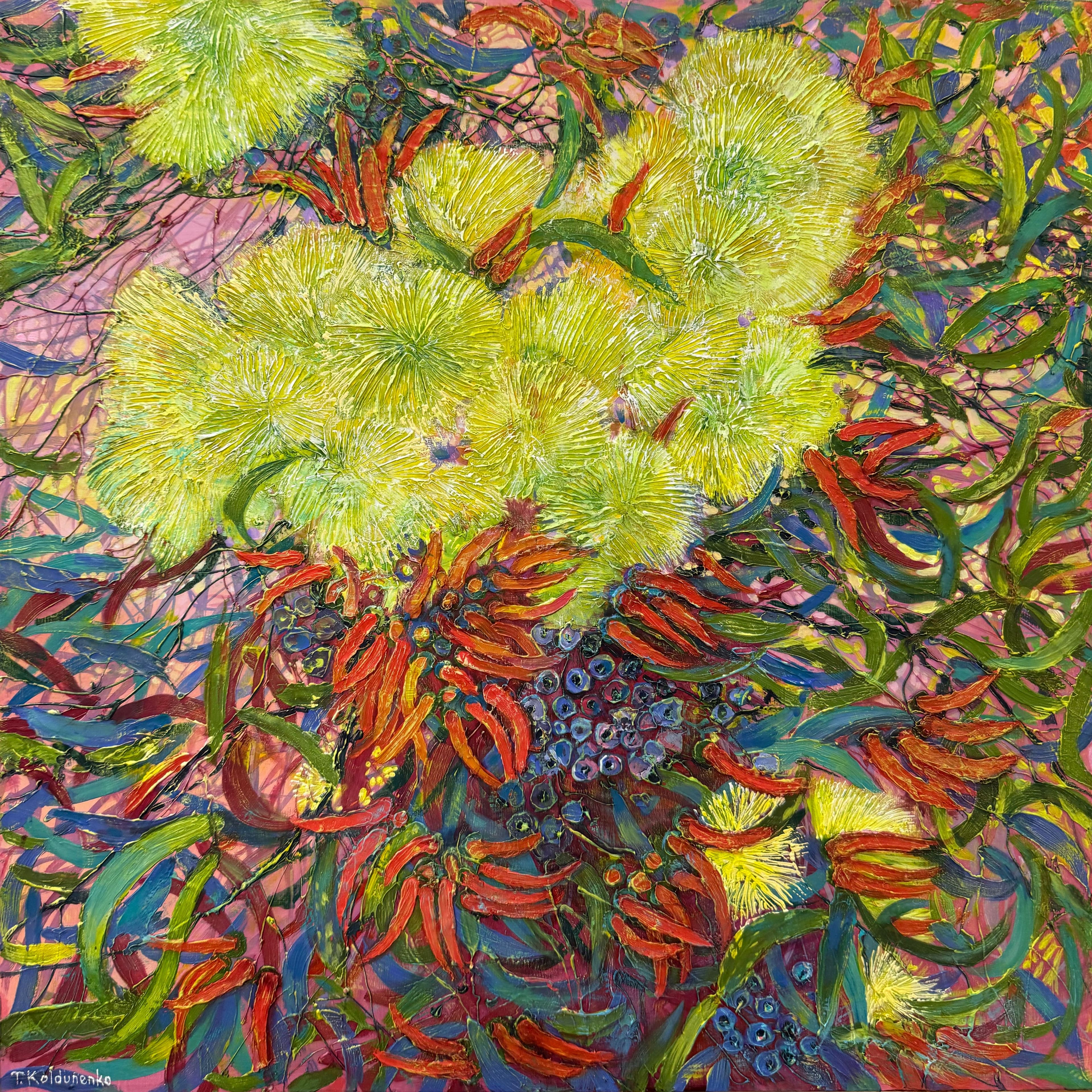
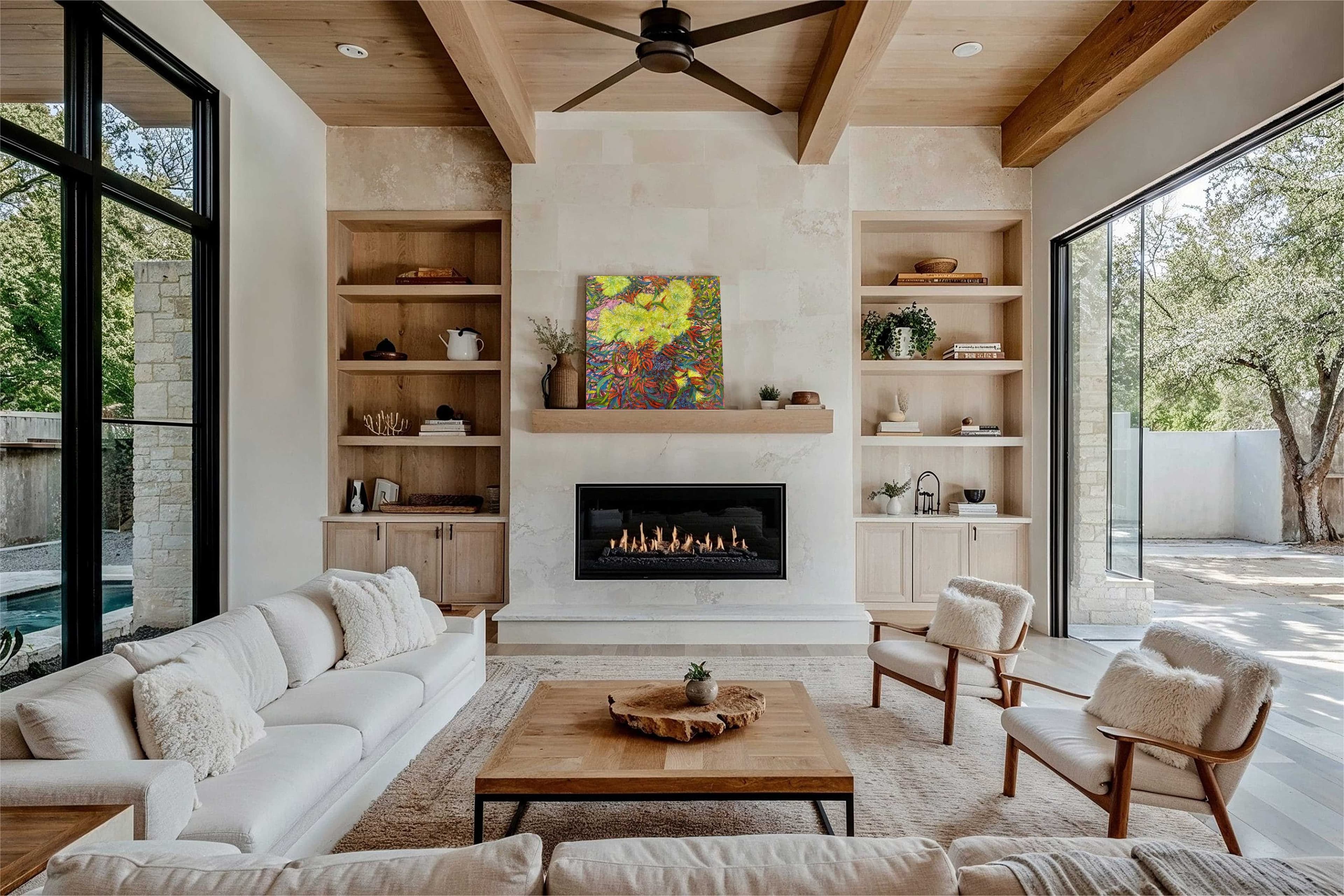
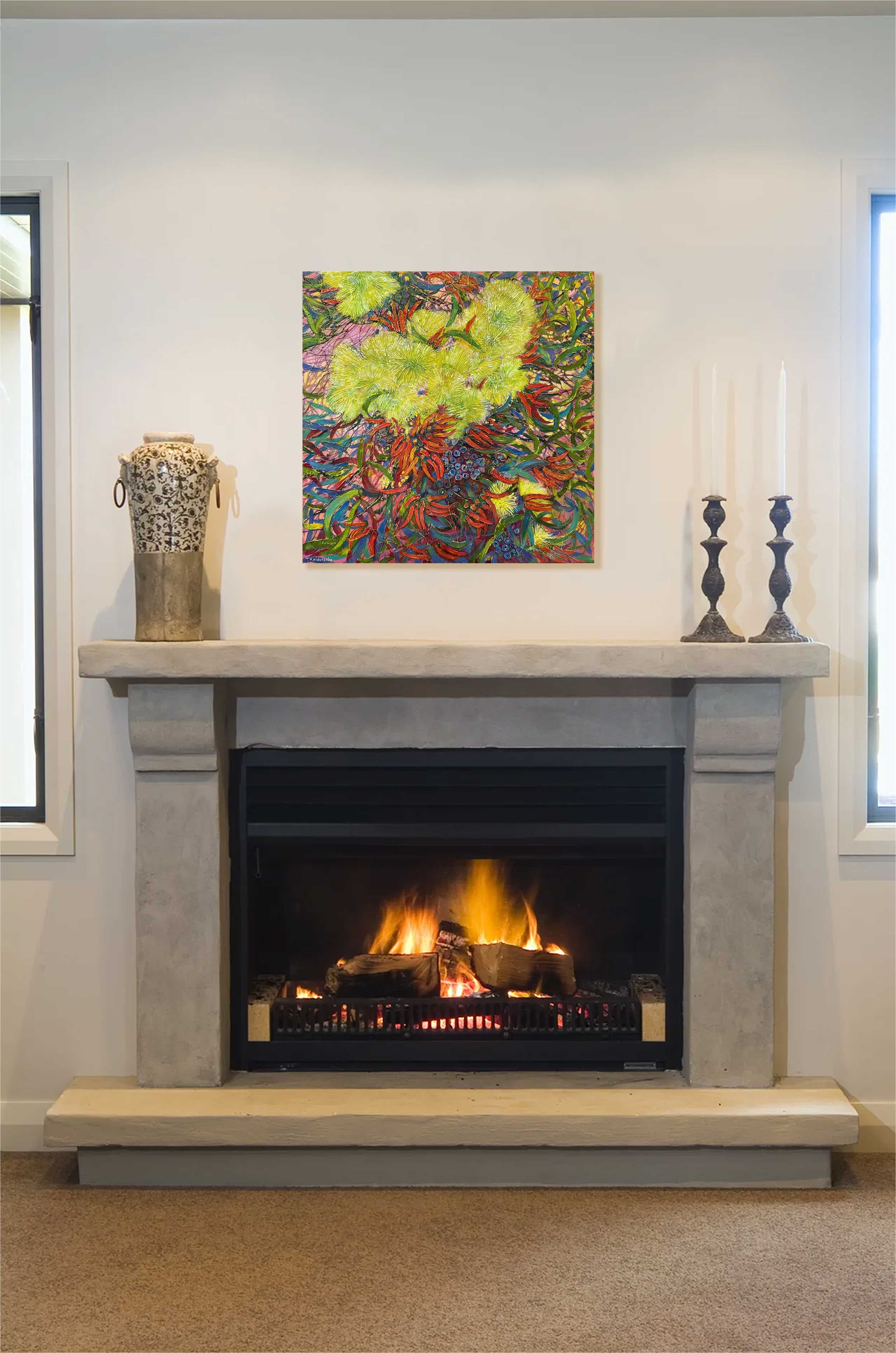
My newest artwork, What the Red Caps Hide: Lime Bloom, was SOLD at the 50x50 Exhibition at Brunswick Street Gallery, Melbourne.
This tree portrait is inspired by the extraordinary flowers and seed capsules of Eucalyptus macrandra. The vivid red nut caps seem to guard a surprise beneath them: luminous lime-green blossoms that transform the tree into an explosion of colour.
What the Red Caps Hide: Lime Bloom
2026
Acrylic and texture paste on wood
50 × 50 cm
📍 Brunswick Street Gallery
Level 1 & 2, 322 Brunswick Street, Fitzroy VIC 3065
🗓 Exhibition: 20 June – 3 July
🥂 Opening Night: Friday 26 June, 6–9 pm
🕙 Open Tue–Sat 10am–5pm | Sun 11am–4pm | Closed Mondays
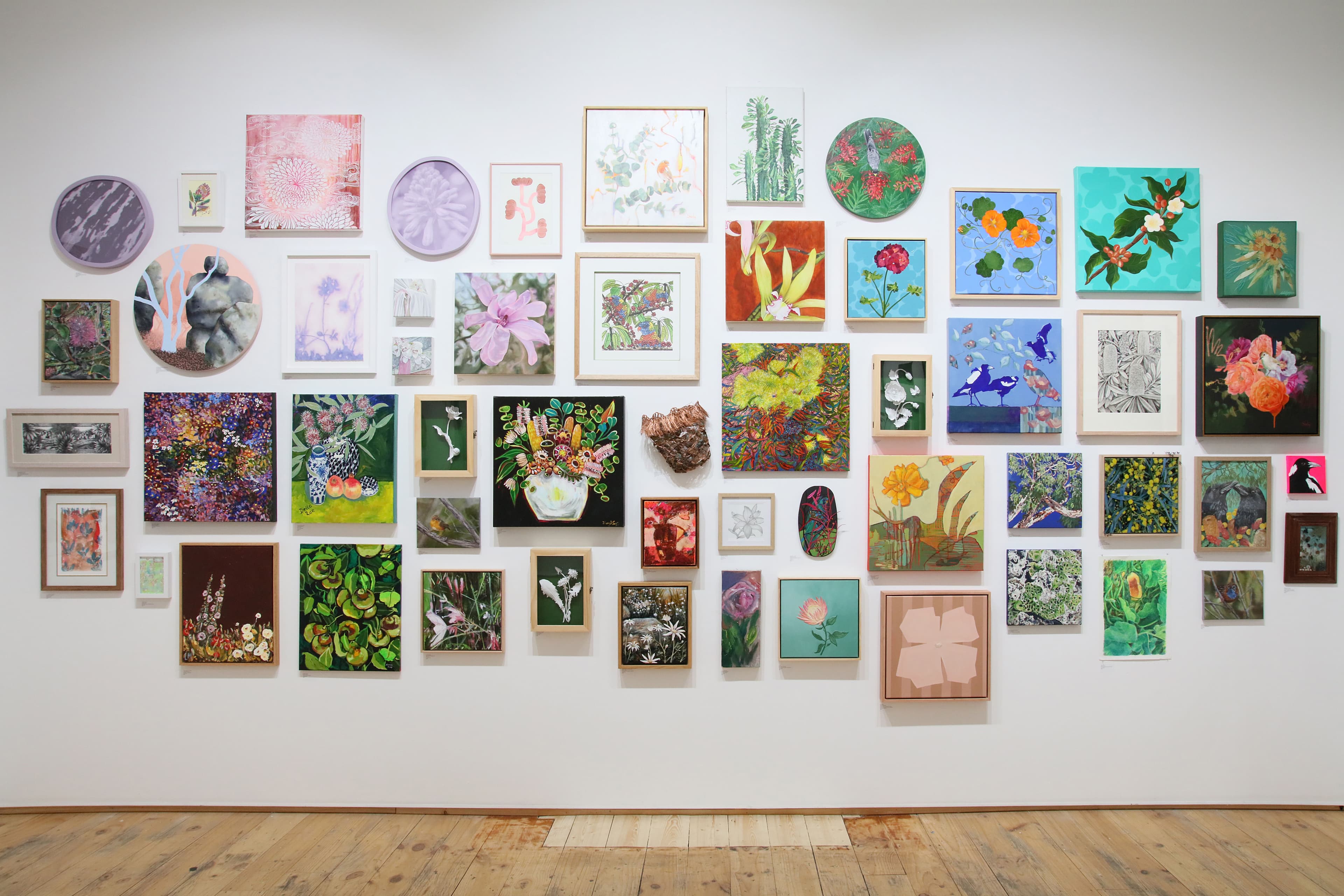
Still time to see the 2026 Fifty Squared Art Prize — Australia’s largest open-call exhibition for wall-based works (50×50cm and under), featuring over 900 artworks. So much incredible work in one space — a true snapshot of contemporary practice.
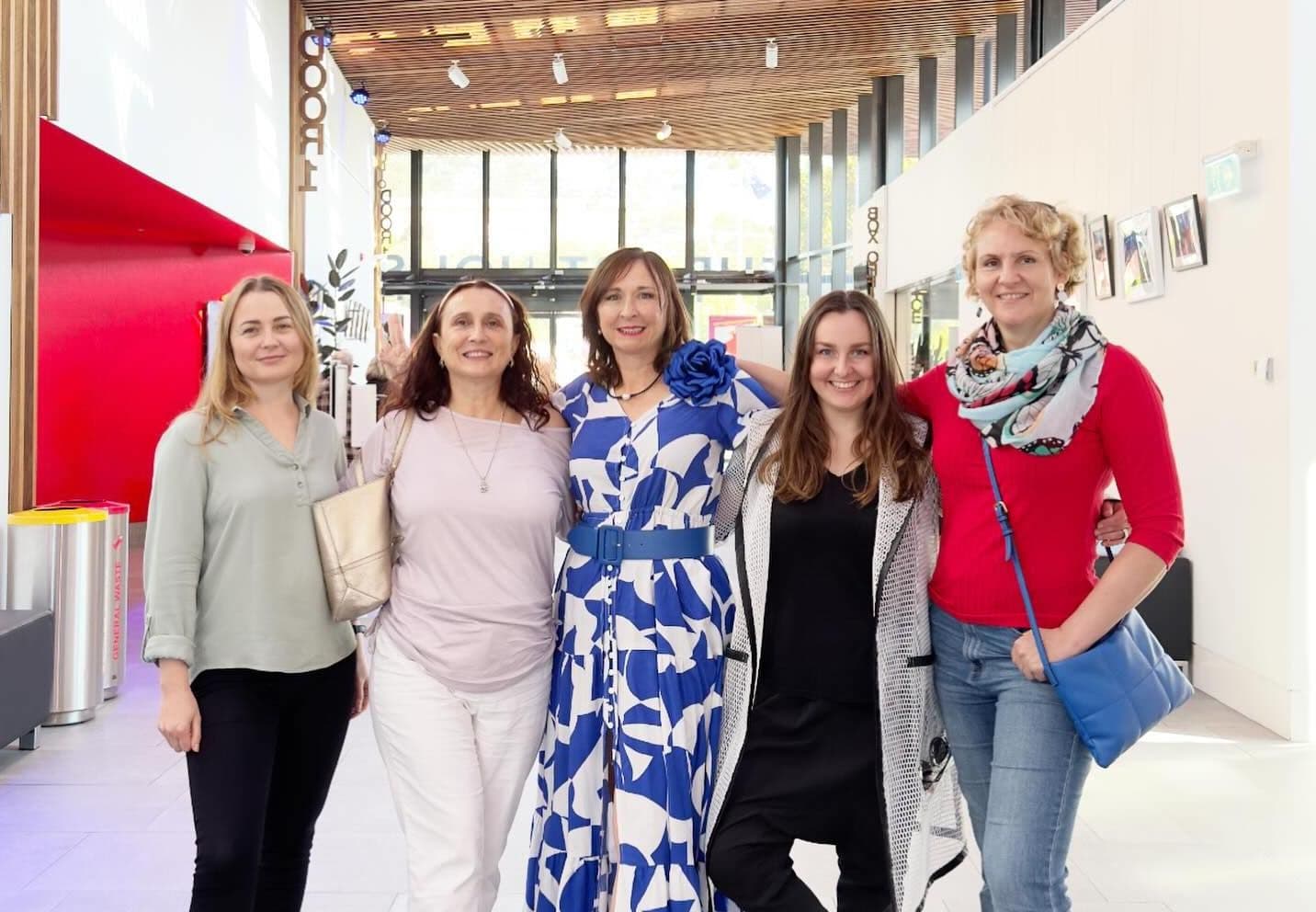
Breathing Space was a group exhibition by True Blue & a Little Bit of Yellow, held at The Art House, Wyong, NSW, from 1–25 May 2024. It felt good to return to the Central Coast and exhibit together once again. The works on display moved between bold painterly gestures and refined detail, with many pieces inspired by the coastal landscapes of the Central Coast and Sydney’s Northern Beaches. The exhibition offered space for colour, reflection, and connection — a moment to pause, breathe, and engage with art grounded in place and experience. Breathing Space was both a return and a continuation — of shared practice, shared values, and ongoing support through art.
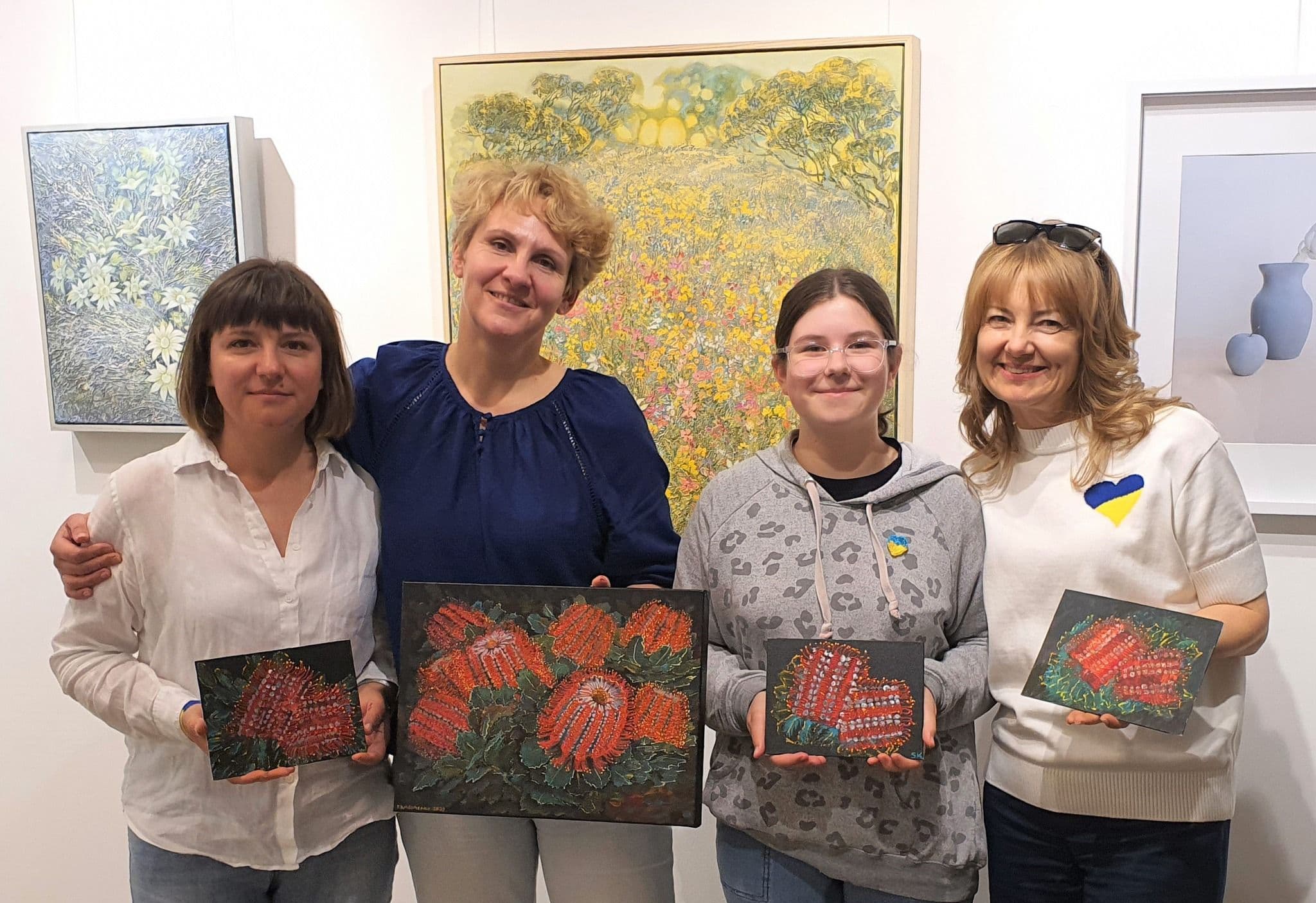
There is a particular kind of magic in creating art surrounded by so many artworks. Working within the exhibition space was deeply inspiring, and behind us you could glimpse True Blue & a Little Bit of Yellow — AUSTRALIANA unfolding around the workshops. I am immensely proud of everyone who took part in the painting workshops during the Australiana exhibition. Scarlett banksia bloomed in every artwork, each one different, each one full of care and attention. The second workshop focused on native flowers, and the results were so strong that it became hard to tell which work was mine and which belonged to the participants. That level of engagement and confidence is something truly special. People often ask how to cope with stress, how to live with worry, how not to feel overwhelmed by the news from Ukraine. My answer is simple: respond in the way you can, and stay connected. Art, shared time, and human presence matter. Thank you to everyone who came to support, create, and be present. I hope these workshops brought moments of light and positive energy. We choose to live fully, to stay strong, stay together, and find joy in art and friendship — despite everything.